

Swinger Dos and Donts: The Etiquette Every Lifestyle Couple Needs to Know
Etiquette in the swinging lifestyle is not about formality or performance. It is about mutual respect, genuine consent, and the understanding that every person in a lifestyle space is there by choice and deserves to have that choice honored. The dos and donts that follow are not arbitrary social norms. They exist because the experiences they protect and the harms they prevent are real.
New couples often worry most about the logistical questions: where to go, what to wear, how introductions work. Etiquette tends to fall lower on the preparation list. But the couples who create the best early experiences in the lifestyle and who are welcomed back into communities and by other couples are almost always the ones who got the etiquette right before they got anything else right.
This guide covers the essential dos and donts in pairs, giving each the explanation it deserves. Understanding why these norms exist makes them far more intuitive to apply in the moment than a simple list of rules ever could. See swinger club etiquette for a deeper dive into club-specific behavior, and first time swinging rules for setting the framework within your own couple.
DO: Ask Before Touching Anything
Physical contact in lifestyle spaces is always initiated by asking, never by assuming. This applies to handshakes, hugs, touches to an arm or shoulder, dancing together, and obviously anything more intimate. The norm of asking first is universal in healthy lifestyle communities and is one of the clearest markers that distinguishes couples who understand the culture from those who do not.
Asking does not need to be clinical or awkward. "Can I give you a hug?" or "Is it okay if I..." is sufficient. What matters is that the other person has had the chance to say yes, say no, or signal something other than immediate agreement. Touch without asking removes that choice.
DON'T: Assume Interest Because Someone Is in a Lifestyle Space
Being in a swinger club or a lifestyle social event does not mean someone is interested in connecting with you specifically. It does not even mean someone is interested in playing that evening. People attend lifestyle events for many reasons: to socialize, to observe, to support a partner, to meet friends who are part of their community. Presence at a lifestyle event communicates only that someone is part of this world. It communicates nothing about their specific interest in you.
This misunderstanding is behind many of the most uncomfortable experiences beginners create for themselves and others. Approaching every person at an event as a potential play partner, or interpreting friendliness as invitation, consistently misreads the social context. Read the room, read the specific interaction, and let genuine mutual interest emerge through conversation and explicit expression rather than assumption.
DO: Introduce Yourselves as a Couple
The lifestyle is fundamentally a couple-centered community. When meeting new people in lifestyle spaces, introducing yourselves as a couple signals that you understand the social structure and are there as a team. It also helps other couples understand immediately that you are both present and interested in connecting as a pair rather than separately.
Introducing yourselves as a couple does not mean you must always be physically together. It means that your first point of contact with new people establishes your shared context. Other couples generally want to know both people are present, interested, and on the same page before any conversation moves toward connection.
DON'T: Separate from Your Partner to Pursue Others Without Agreement
Going off independently to pursue a connection while your partner is unaware or unaccounted for is one of the most commonly cited sources of hurt in beginner couples. The lifestyle is built on mutual participation. When one partner disappears into a conversation or a situation without the other knowing where they are or what is happening, it can create real anxiety, especially for newcomers who are still calibrating their comfort levels.
If you want to separate from your partner during an event, establish in advance what that looks like: check-in expectations, how long, what kind of situations are acceptable to enter without prior discussion. When you have an explicit agreement, separating is a shared decision. Without one, it tends to feel like abandonment.
DO: Accept Rejection Gracefully
No is a complete sentence in the lifestyle, and how you receive it matters enormously to how you are perceived and how welcome you are in any community. When another couple or individual declines your interest, the appropriate response is a warm, brief acknowledgment and a genuine move on. "Totally understood, have a great night" and then you disengage. That is it.
Accepting rejection gracefully is not just good manners. It is what makes lifestyle spaces feel safe for everyone. When people know that expressing disinterest will be met with respect rather than reaction, they feel safer being honest. That honesty is what makes genuine connection possible. The couples who are most welcomed and most often approached are almost always those who have a visible track record of handling rejection with grace.
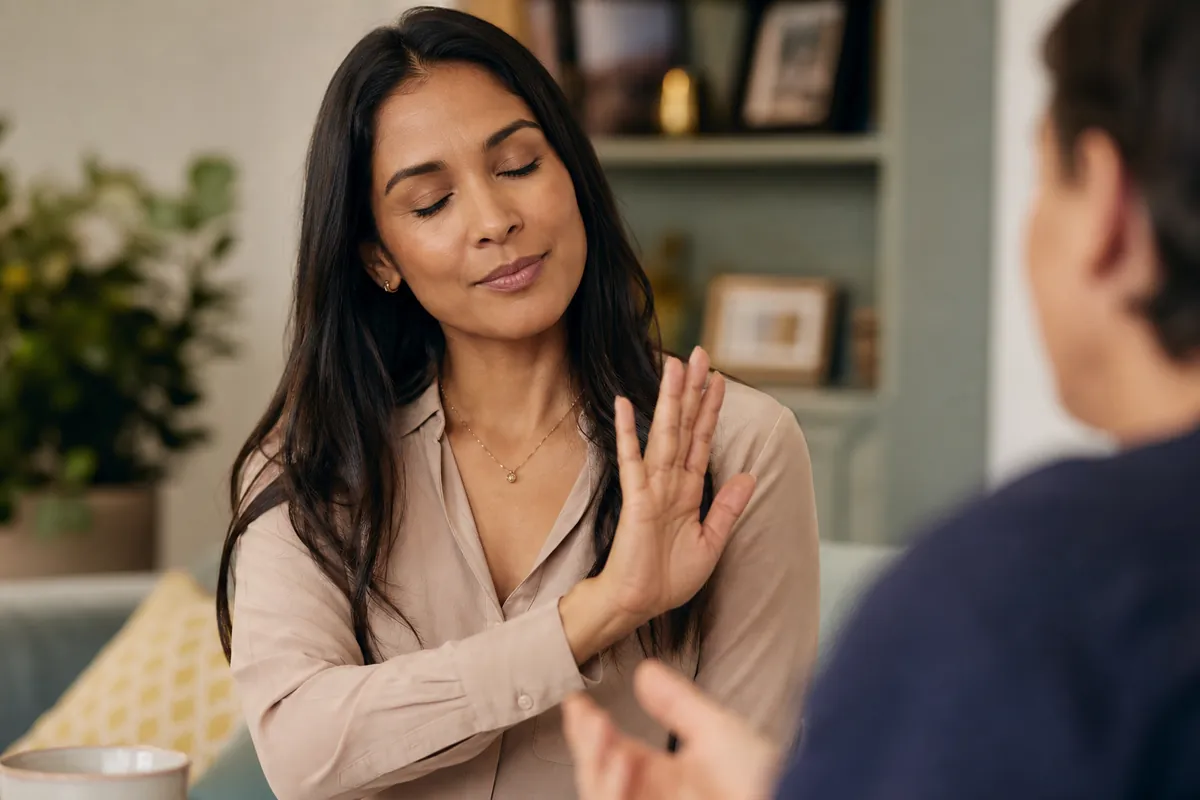
DON'T: Pressure or Negotiate After a No
When someone says no, or signals disinterest, that is the end of that conversation. Returning to the topic, offering modified proposals, explaining why they should reconsider, or making them feel guilty for declining are all forms of pressure that have no place in the lifestyle. They undermine consent, make people feel unsafe, and mark you as someone whose no is not reliable to be respected in return.
The same applies to soft or ambiguous signals. If someone is not clearly enthusiastic, treat it as a no and move on. Waiting for people to say no more firmly before backing off is not acceptable. Enthusiastic, freely given interest is what you are looking for. Anything less is not a green light, it is a reason to give space.
DO: Respect Couples-Only Spaces and Rules
Many swinger clubs and events operate with specific rules that exist to maintain the culture they are trying to create. Couples-only policies, rules about single men, designated play spaces with specific protocols, dress codes, photography policies, and other house rules all serve purposes that the venue has considered carefully. Following them without exception is basic respect for the community you are entering.
If you are unsure what the rules are at a venue, ask the hosts or staff before the event begins. Do not discover the rules by violating them. And if you disagree with a venue's rules, the appropriate response is to find a venue whose rules you agree with, not to push boundaries at the one you are in.
DON'T: Push for Full Swap on the First Meeting
The most common complaint experienced lifestyle couples have about beginners is the tendency to rush toward full swap immediately. A couple you have just met, in the first conversation, should not be receiving proposals to move to a play space. That kind of acceleration disregards the relationship-building that most lifestyle couples value and signals that you are primarily interested in the activity rather than the people.
Most connected lifestyle experiences develop over at least one full social evening before any physical component is introduced. Sometimes two or three. The couples who are most sought after in the lifestyle are generally those who build genuine rapport and allow things to develop naturally. Patience is not just respectful. It tends to result in significantly better experiences.
DO: Keep What You See and Hear at Events Private
Discretion is one of the lifestyle community's most fundamental norms, and it extends in both directions: your information is private, and so is everyone else's. What you see, hear, or learn about other people at lifestyle events stays within the community. Full stop.
This means not sharing names, faces, details of encounters, or identifying information about other people with anyone who was not present. It means not posting on social media about who you saw where. It means treating every piece of personal information you receive in a lifestyle context as confidential by default. The lifestyle community is smaller than it looks, and trust, once broken, is difficult to rebuild.
DON'T: Use Your Phone in Intimate Spaces
Phones do not belong in play areas or intimate spaces at lifestyle events. Most venues have explicit rules about this, and the reason is obvious: photography and video recording without consent is a serious violation of privacy and trust. Even if your intent is innocent, producing your phone in an intimate space makes everyone around you uncomfortable and signals that you do not understand or respect the environment.
Keep your phone in your bag or in a designated area outside of play spaces. If you genuinely need to step away to check something, leave the play area first. This is non-negotiable etiquette in the lifestyle, not a suggestion.
DO: Bring Your Own Supplies
Come prepared. Most lifestyle events and clubs provide some supplies, but you should never assume coverage. Condoms, personal lubricant, and anything else specific to your preferences or needs should be in your bag before you arrive. Arriving without your own supplies and either going without or relying on others is unprepared at best and inconsiderate at worst.
Bringing your own supplies also signals that you take sexual health seriously, which matters to every potential playmate you might meet.
DON'T: Assume the Host Provides Everything
Related to the above: lifestyle hosts and venues invest significant time, effort, and money creating the environments and events they provide. It is not their job to supply every personal item every attendee might need. Expecting a fully stocked venue to cover your every preference places unreasonable burden on hosts and often leads to disappointment when those expectations are not met.
Prepare as though the venue provides nothing except the space and the community. Anything else is a bonus. This orientation makes you a considerate guest rather than a demanding one.
DO: Debrief with Your Partner After Every Experience
The debrief is one of the most important practices in the lifestyle and one of the most consistently skipped. After every event or experience, make time to sit with your partner and talk about how it went. What you enjoyed. What came up emotionally. What you want to do differently. What you want more of.
Debriefs after positive experiences are as important as those after difficult ones. They build shared understanding, reinforce connection, and create a foundation of mutual knowledge that makes every subsequent experience better than the last. Couples who skip debriefs tend to accumulate unaddressed feelings that eventually surface in more disruptive ways.
DON'T: Suppress Negative Feelings to Avoid Conflict
The lifestyle creates emotional complexity. Pretending it does not, or suppressing negative feelings to maintain a smooth surface, consistently backfires. Unexpressed feelings do not disappear. They accumulate and tend to come out in ways that are harder to address than the original feeling would have been.
If something bothered you about an experience, say so in the debrief. If something is coming up that you cannot easily name, say that too. "I am not sure what I am feeling but I want to talk about it" is a perfectly legitimate thing to bring to a debrief. The norm of honest emotional communication is what separates couples who thrive in the lifestyle from those who repeatedly wonder why it keeps feeling harder than they expected.
DO: Dress for the Venue and Theme
Most lifestyle events and clubs have dress codes or themes, and taking them seriously matters. Dress codes are not arbitrary. They maintain the atmosphere that makes the event what it is. A venue that specifies lingerie and club attire is not going to feel like the same experience for other attendees if a couple arrives in jeans and a t-shirt. Showing up appropriately dressed is a simple form of respect for the event and everyone in it.
If you are unsure what the dress code means in practice, ask the venue or look at their social media for photos from past events. When in doubt, err toward more dressed up rather than underprepared. Most venues would rather turn away someone who overdressed than deal with someone who clearly did not try.
DON'T: Show Up Underprepared and Blame the Event
Arriving at a lifestyle event underprepared, whether that means underdressed, unfamiliar with the venue's culture, or having done no research about what the event involves, and then finding it disappointing or uncomfortable is a self-created problem. The lifestyle community expects participants to do their homework.
Research venues before you attend. Understand their specific culture and rules. Know what type of event it is and what to expect. If an event is not what you hoped for, examine whether the issue was the event itself or whether expectations were not properly calibrated by preparation. Most events that get blamed are simply mismatched to the couple's actual preferences, which is something that research would have revealed in advance.
For related reading, see how to get started in the swinging lifestyle, swinger club etiquette, first time swinging rules, and swinger consent rules.
Join the West Coast Swingers Community
The best way to learn etiquette is to be around people who model it well. The West Coast Swingers members site connects you with a community of couples who take these norms seriously and extend the same courtesy to others that they expect to receive. Join us here and connect with a community that makes the lifestyle what it should be.
Final Thoughts
Swinger etiquette is not complicated, but it does require attention and deliberate practice, especially in early experiences when excitement can easily override care. The dos and donts in this article cover the areas where beginners most often create problems for themselves and others, and where getting things right most noticeably elevates the quality of the experience.
The underlying principle behind all of them is the same: treat every person in a lifestyle space as a full human being whose preferences, boundaries, privacy, and autonomy deserve genuine respect. When that principle is your compass, most specific etiquette questions answer themselves. And the community you build a reputation in will reflect it back to you consistently.
Free for couples
Get the Free Beginner’s Checklist for Couples
Eight steps from the first honest conversation to your first night out, plus new guides, club and event news, and new games. Unsubscribe any time.
Related Posts

Swinger Club Etiquette
Beginner Swingers / By Alex