
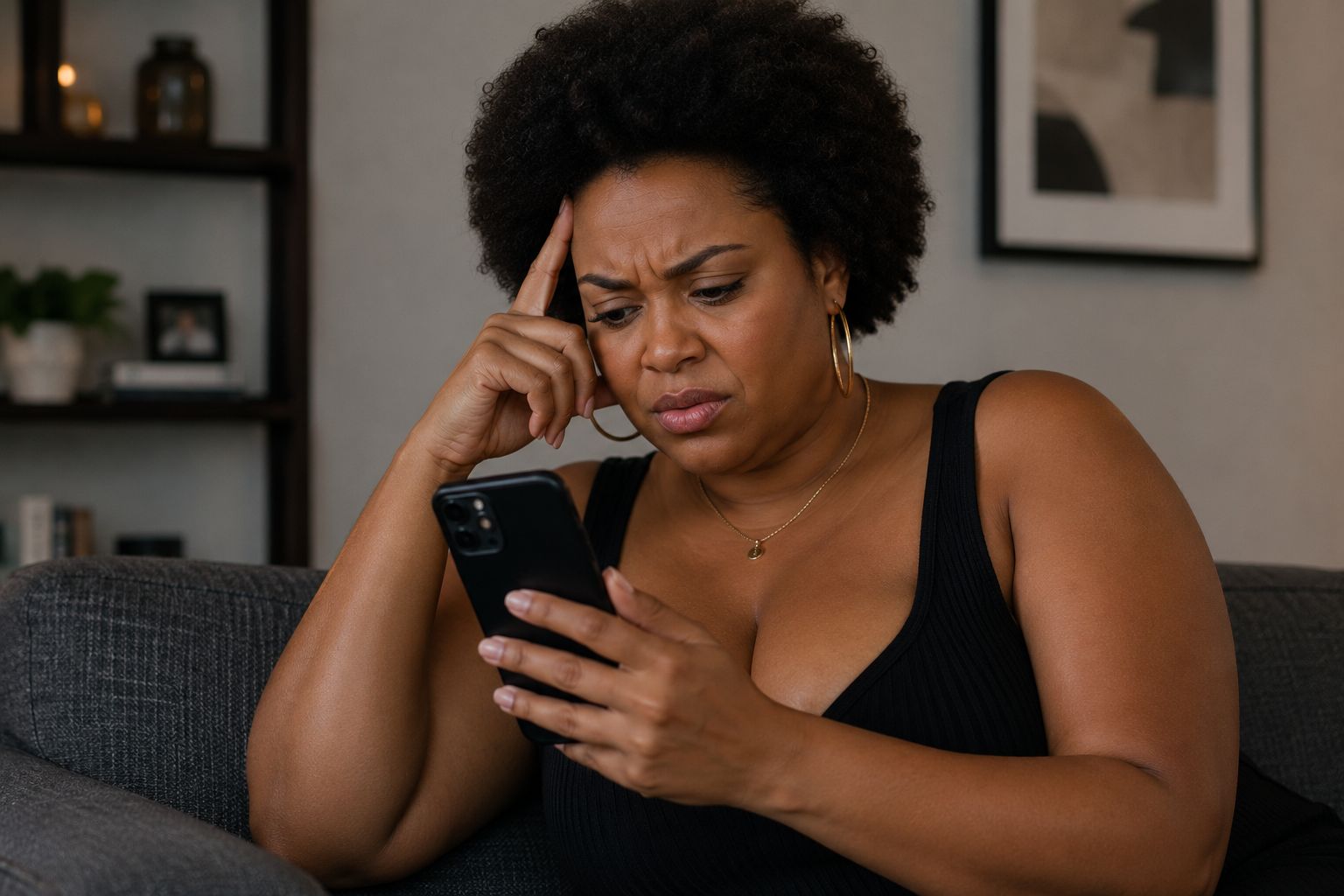
Swinger App Mistakes That Kill Your Chances on Lifestyle Dating Sites
/ Swinger Dating & ProfilesMost couples who struggle on lifestyle dating apps are not failing because of who they are. They are failing because of how they are presenting themselves and how they are engaging with the platform. These are fixable problems, but fixing them requires understanding what you are actually doing wrong.
The lifestyle community on platforms like SDC, Kasidie, and SLS is populated by couples who are doing the same thing you are: sorting through profiles to find people they might genuinely connect with. They are making snap judgments based on photos, bios, and first messages, just as you are. The difference between the couples who generate genuine interest and the couples who get ignored often comes down to a handful of consistent, correctable patterns.
This guide walks through the ten most common swinger app mistakes that kill couples' chances on lifestyle platforms, explains exactly why each one is a problem, and offers specific guidance on what to do differently. If you have been on a lifestyle platform for months with little to show for it, at least a few of these mistakes are likely in play.
Why Most Couples Struggle on Lifestyle Apps
Lifestyle dating platforms are not like mainstream dating apps, and treating them the same way is itself the foundational mistake. On a mainstream app, you are sorting through a large population with varying degrees of interest in connecting. On a lifestyle platform, everyone has already taken the significant step of publicly identifying as someone in or curious about the lifestyle. The filtering that happens on mainstream apps has already occurred.
This means the competition is different. You are not competing against people who are not interested in the lifestyle. You are competing against other couples who are equally motivated, many of whom have been in the community longer and have learned what works. The bar for profile quality, communication approach, and social awareness is higher because the population is more invested.
Understanding that context makes the mistakes below easier to avoid. Each one represents a failure to meet the expectations of an experienced lifestyle community, whether that means photo quality, bio substance, or the social etiquette that governs how people communicate with each other in this space.
Mistake 1: No Face Photo or Only One Blurry Pic
This is the most common and most damaging mistake couples make. In the lifestyle community, photos are the first and often decisive signal of whether another couple will engage with you. A profile with no face photos, only one low-quality image, or photos that are clearly years out of date tells other couples that you are either not serious, not comfortable enough to show up authentically, or not invested enough to put in basic effort.
Privacy in the lifestyle is a legitimate concern, and many couples keep their faces private on public-facing profiles. That is reasonable. The mistake is having no plan to share face photos privately. Experienced couples in the lifestyle expect that as trust develops over the course of a conversation, face photos will be exchanged. If you are not prepared to share any identifying photos at any point in the process, you are creating a barrier that most people will not be willing to push past.
The fix is straightforward: build a gallery that shows who you actually are. Multiple photos from different contexts, a candid vacation shot, a clear and recent image from a social setting, and if you are keeping faces private publicly, a private album you are willing to share early in a genuine conversation. Profiles with five or more photos consistently receive more engagement than profiles with one or two.
Mistake 2: Generic Bio That Says Nothing Specific
Read back any lifestyle platform bio that includes the phrase "we are an adventurous couple looking to have fun with the right people" and ask yourself: what does that actually tell you about these people? The answer is nothing. That sentence could describe literally every couple on the platform. A bio that says nothing specific is functionally the same as no bio at all.
Generic bios fail because they give potential connections nothing to respond to. When another couple reads your profile before deciding whether to message you, they are looking for something specific that resonates: a shared value, a sense of humor they connect with, a preference that matches theirs, a detail that distinguishes you from the other fifty couples they browsed today. A generic bio provides none of that material.
A strong bio answers the questions that matter: How long have you been in the lifestyle? What do you enjoy about it? What are you specifically looking for right now? What are your soft limits and hard limits, at least in general terms? What are you like as people outside of the lifestyle? What makes you interesting? A bio with that substance gives other couples something real to respond to and demonstrates that you have actually thought about what you want.
Mistake 3: Leading with Explicit Requests in the First Message
The lifestyle community has a strong culture of gradual escalation. People who skip social warm-up entirely and open with explicit descriptions of what they want to do are not just being forward: they are signaling that they do not understand or do not respect the social norms of the community. That signal carries real consequences for how you are perceived and treated.
First messages should accomplish one thing: initiate a genuine conversation. Reference something specific from their profile to show you actually read it. Ask a question that invites a real answer. Introduce yourselves briefly and warmly. Keep it short, keep it friendly, and keep it at a social rather than sexual level. The explicit conversation happens later, after rapport has been established and both couples have decided they are interested in each other as people, not just as prospects.
Couples who lead with explicit requests in first messages not only get ignored or blocked: they develop a reputation within the regional lifestyle community that follows them on platforms where members know each other. The lifestyle community is smaller than it appears.
Mistake 4: Only One Partner Runs the Profile
When a profile has clearly been created and is being managed by only one partner, experienced lifestyle couples notice. The photos may feature both people, but the bio is written in the first person singular and focuses primarily on one partner's preferences. Messages use "I" instead of "we." One partner responds to messages while the other seems uninvolved.
This pattern raises immediate questions. Is the other partner actually on board with this? Are both people equally invested in finding connections? Will there be a bait-and-switch situation where one partner is enthusiastic and the other is reluctant when an actual meeting is proposed? These questions may be unfair in some cases, but they are logical responses to a consistent pattern, and experienced couples will ask them.
The fix requires genuine joint engagement. Both partners should contribute to the bio. Both should participate in conversations, even if one takes the lead on logistics. The overall impression should be of two people who are equally present and equally interested. When that impression comes through clearly, it removes a significant barrier to engagement.
Mistake 5: Not Specifying What You Are Looking For
Vague openness is not appealing; it is confusing. Couples who describe themselves as "open to everything" or "looking to see where things go" are not attracting a wide range of compatible people: they are attracting no one in particular, because no one knows whether they are actually a good match.
The lifestyle encompasses a very wide range of practices and relationship styles. Soft swap, full swap, same-room, separate rooms, couples only, open to singles, hierarchical preferences, specific physical preferences, specific chemistry requirements, a preference for friendship first versus more casual connections. All of these are real variables that determine whether two couples are actually compatible, and leaving all of them undefined forces potential connections to guess.
Being specific about what you are looking for is not limiting: it is clarifying. The couples who are a good match for you will see themselves in your description. The ones who are not will self-select out, which saves everyone time. Specificity is a feature, not a constraint.
Mistake 6: Being Passive and Waiting for Messages
Some couples create a profile, add photos, write a bio, and then wait. Weeks pass with little engagement. They conclude that the platform does not work or that they are not attractive enough to generate interest. Often the real problem is simply that they have not reached out to anyone.
Lifestyle platforms reward active participation. Browsing profiles, favoriting couples, sending genuine first messages, and engaging with the platform's community features all increase your visibility and your response rate. Couples who send ten thoughtful, specific first messages a week consistently generate more connections than couples who send none and hope to be found.
Being the one to reach out is not a sign of desperation. It is a sign of confidence and genuine interest, both of which are appealing. The social norm that says it is undignified to initiate does not serve you on a platform where everyone is there for the same purpose.
Mistake 7: Moving Too Fast from App to Meeting
The opposite error from being too passive is moving too fast. Couples who propose meeting in person after two or three brief exchanges are almost always getting ahead of where the relationship actually is. The other couple has not had enough information or time to assess whether they trust you, whether they find you interesting beyond your photos, or whether you are actually compatible. Pushing for a meeting before that foundation is established creates pressure and rarely produces a yes.
The appropriate pace for most lifestyle connections is: establish genuine rapport through messaging over the course of several days, deepen the conversation with specifics about preferences and expectations, potentially move to video chat to confirm chemistry and authenticity, and then propose a casual first meeting with no play expectation attached. That sequence, compressed or extended depending on the mutual energy, consistently produces better outcomes than rushing any step of it.
Mistake 8: Ignoring Read Receipts and Ghosting Etiquette
The lifestyle community operates with a higher expectation of courtesy than most mainstream dating contexts. When someone has read your message and chosen not to respond, the appropriate response is to move on, not to send follow-up messages asking why they did not respond or expressing frustration. When you have been in a conversation and decide you are not interested in continuing, a brief and kind decline is significantly more respectful than simply disappearing.
Ghosting is common in the lifestyle, just as it is in mainstream dating. It is still considered rude, and couples who develop a reputation for treating people dismissively find that reputation limits their options within regional communities. A simple "thanks for your message, we do not think we are the right fit, best of luck" takes thirty seconds and leaves the other couple with a much better experience of interacting with you.
The reciprocal principle applies to sending messages: if you have read-receipt information showing that a couple opened your message and did not respond, one follow-up after a week is reasonable. Two follow-ups is too many. The answer is no, and persisting past it damages your reputation.
Mistake 9: Couple Privilege Behavior
Couple privilege is the tendency of established couples to treat singles, particularly single women, as accessories to their dynamic rather than as autonomous people with their own preferences and boundaries. It manifests in many ways on lifestyle platforms: only messaging single women on behalf of both partners without the other woman being a genuine participant in the desire, dropping contact with a single person when one partner loses interest without any communication, treating singles as less deserving of courtesy because they are not in a primary couple.
The lifestyle community, particularly the more experienced and thoughtful parts of it, has grown increasingly aware of and vocal about couple privilege. Couples who demonstrate this pattern quickly develop a reputation and find themselves excluded from the better social circles and events within their regional community. Singles talk to each other. So do the couples who take inclusivity seriously.
Avoiding this mistake means treating every person you interact with, regardless of their relationship structure, as a full human being deserving of the same courtesy, honesty, and respect you would want for yourselves.
Mistake 10: Not Updating the Profile or Photos
A profile that has not been touched in six months sends a signal: either this couple is no longer active, or they do not care enough to keep their presence current. Either interpretation reduces engagement. On most lifestyle platforms, profile activity is a signal that is visible to other users through "last active" timestamps or recent activity feeds. An inactive-looking profile is passed over in favor of profiles that appear to belong to people who are actually engaged with the platform.
Regular maintenance is not a major time investment. Updating photos seasonally, refreshing the bio to reflect where you are in your lifestyle journey right now, and simply logging in and engaging with the platform regularly are all that is required. These small actions keep your profile appearing active and relevant in search results and community feeds.
How a Strong Profile Actually Reads
To make the above advice concrete, consider what the bio of a well-functioning lifestyle profile actually contains. It opens with something specific and personal: "We have been in the lifestyle for about three years, based in [city], and we genuinely enjoy the social side as much as anything else." It describes the people as individuals: "She is outgoing and loves dancing; he is more reserved one-on-one but very warm once he is comfortable." It specifies what they are looking for with enough clarity to be useful: "We are interested in other established couples, prefer friendship and a slow build over meeting the same week, and we are soft swap with the right people." It addresses the practical and the human: "We value good conversation, honesty about preferences, and people who treat this as a mutual thing rather than a transaction."
That bio gives another couple everything they need to know whether they are a potential match. It does not tell them everything about these people, but it tells them enough to decide whether to reach out with genuine interest. That is exactly what a profile bio is supposed to accomplish.
For more on building a profile that generates real results, visit our full guide to a swinger dating profile that works. For specific tips on photos, bio writing, and platform navigation, see our swinger profile tips. And if you are encountering suspicious accounts in your browsing, our guide on how to spot fake swinger profiles covers what to watch for.
Join the West Coast Swingers Community
Fixing your profile approach is only half the equation. The other half is being on a platform where genuine couples are actively looking for connections. The West Coast Swingers members platform is built for that purpose, with a community of verified couples who are invested in real connections rather than endless browsing.
Log in or create your member account and put your improved profile in front of people who are ready to connect.
Final Thoughts
The couples who succeed on lifestyle platforms are not necessarily the most conventionally attractive or the most experienced in the lifestyle. They are the ones who present authentically, communicate thoughtfully, engage with the community rather than treating it as a catalog, and treat every person they interact with the way they would want to be treated themselves.
Every mistake on this list is correctable. Some are quick fixes, like updating your photos or rewriting your bio. Others require a genuine shift in how you are approaching the platform and the people on it. All of them are worth addressing if you are serious about finding genuine connections in the lifestyle community.
Start with the mistake that resonates most, make the change, and give the platform time to respond. Results rarely happen overnight in the lifestyle, but they do happen consistently when the approach is right.
Free for couples
Get the Free Beginner’s Checklist for Couples
Eight steps from the first honest conversation to your first night out, plus new guides, club and event news, and new games. Unsubscribe any time.
Related Posts

Swinger Profile Tips
Swinger Dating & Profiles / By Alex