
STD Testing for Swingers: How Often, What to Test For, and Best Options
/ Health, Safety & PrivacyTesting is not something the swinging community does because it has a problem. Testing is something the community does because it takes its health and the health of everyone it interacts with seriously. When you approach STD testing as a community responsibility rather than a personal burden, the entire conversation shifts. It becomes a sign of respect, a mark of an experienced lifestyle couple, and one of the most practical ways to keep enjoying the lifestyle long term without anxiety.
Many couples who are new to the lifestyle underestimate how frequently they should test and what a complete panel actually looks like. Standard annual checkups at most primary care practices do not include a full STI screen. Many doctors will not order herpes, hepatitis, or rectal swabs unless you specifically ask for them. Knowing what to request, how often to do it, and what your results actually mean is essential knowledge for anyone who is sexually active with multiple partners.
This guide covers all of it. For broader context on how testing fits into your overall approach to sexual wellness, see our article on health, safety, and sexual wellness for swingers. For practical guidance on using barriers and protection alongside testing, see safe sex tips for swingers.
What to Test For: The Full Panel for Lifestyle Couples
A standard STI panel at most clinics includes chlamydia and gonorrhea via urine sample, plus an HIV blood test and sometimes syphilis. For most sexually active people this is a reasonable baseline. For active lifestyle couples, it is not enough.
A complete panel for someone engaging in sex with multiple partners should include the following. HIV: use a fourth-generation combination test (p24 antigen and antibody) which can detect infection as early as 18 days post-exposure, compared to 23 to 90 days for older antibody-only tests. Chlamydia: urine swab is standard, but if you engage in oral or anal sex, request pharyngeal (throat) and rectal swabs as well. Standard urine testing misses these sites entirely. Gonorrhea: same as chlamydia, request site-specific swabs for throat and rectum. Syphilis: blood test, easily missed if not specifically requested. Herpes simplex virus: IgG antibody blood test for both HSV-1 and HSV-2. Note that many clinics do not include this routinely; you must ask for it specifically. Hepatitis B and C: blood tests, important for sexually active adults who have not been vaccinated against hepatitis B. HPV: routine testing is not available for most people, a key point addressed in our dedicated HPV and swinging article.
When booking your appointment, be direct. Tell your provider that you are sexually active with multiple partners and want a comprehensive STI screen including site-specific swabs. Some providers will not volunteer this without prompting. You are entitled to ask for the tests that reflect your actual risk profile.
How Often Active Lifestyle Couples Should Test
The standard recommendation for sexually active people with multiple partners is a full panel every three months. This quarterly schedule accounts for the window periods of most common infections, the practical frequency of play for many active couples, and the reality that many STIs produce no symptoms.
If you are less active, testing every six months may be appropriate. If you have a specific exposure concern, such as a condom failure or a partner disclosing a new diagnosis, test immediately at the site of any concern and again at the relevant window period for each infection.
The three-month interval is not arbitrary. Chlamydia and gonorrhea can be detected within one to two weeks of infection. Syphilis typically becomes detectable within three to six weeks. HIV with a fourth-generation test is reliably detectable by 45 days in the vast majority of cases, with most infections detectable by 18 to 23 days. Herpes IgG antibodies develop over 12 to 16 weeks, so a negative result shortly after a potential exposure may not be conclusive.
Quarterly testing also creates a sustainable rhythm. When testing is scheduled in advance, it becomes routine rather than reactive. Couples who test together and share results are better positioned to have honest health conversations with potential partners.
At-Home Testing vs Clinic: Pros and Cons of Each
Both at-home testing and clinic-based testing have legitimate advantages. The right choice depends on your preferences, access, and what you need from the experience.
Clinic testing offers a few advantages that at-home kits cannot replicate. A trained provider can collect rectal and pharyngeal swabs, which require some skill to do correctly. Clinics can offer on-site counseling, immediate discussion of results, and faster access to treatment if needed. Sexual health clinics and Planned Parenthood locations are often more comprehensive than primary care practices and more accustomed to working with sexually active adults without judgment. If you have symptoms, a clinic visit is always preferable.
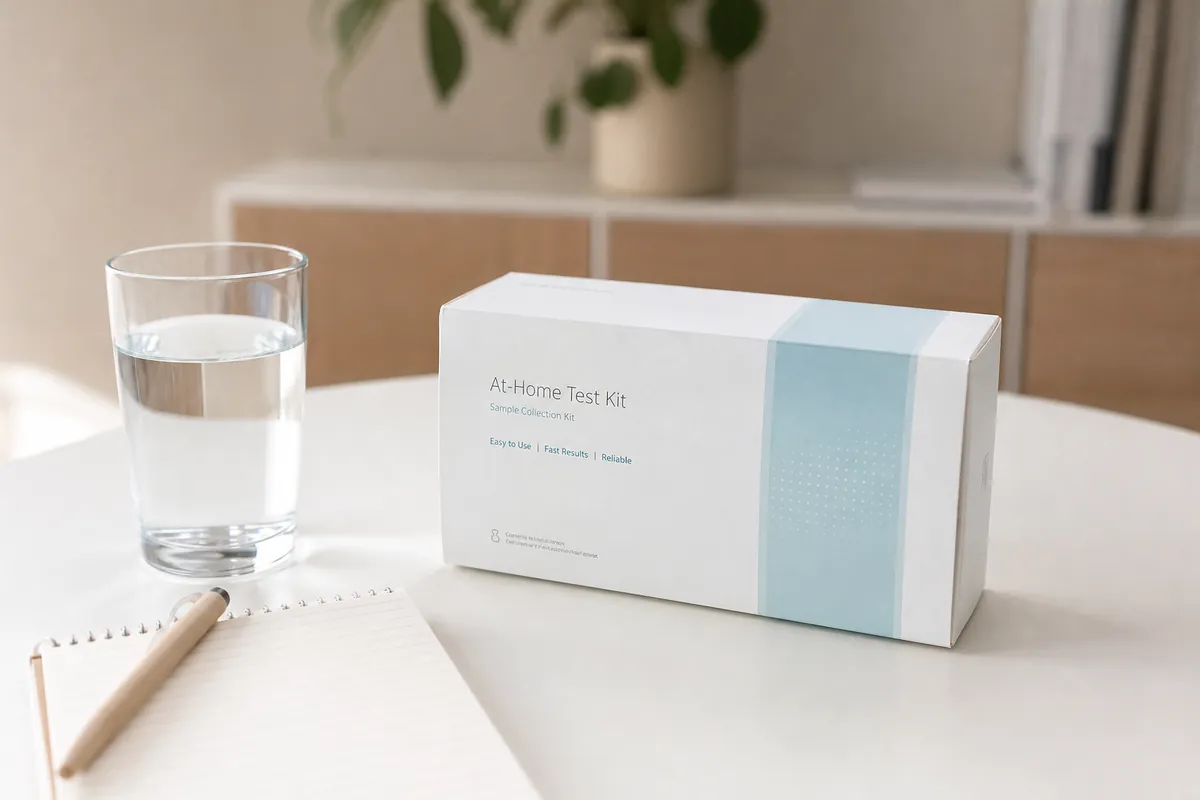
At-home testing has significant practical advantages. It is private, convenient, and available without a doctor's appointment. For couples who travel frequently, have demanding schedules, or live in areas with limited access to sexual health clinics, at-home kits make consistent testing feasible when clinic visits might not be. Results typically arrive within a few days via a secure online portal, and most services provide a follow-up consultation with a healthcare provider if results are positive.
The main limitation of at-home kits is that most use urine and blood samples collected at home, which means they cannot perform site-specific rectal or pharyngeal swabs. If you regularly engage in oral or anal sex, clinic-based site-specific testing is an important complement to at-home panels, even if you do at-home testing for most of your routine screens.
Best At-Home STI Test Kit Options in 2026
Several at-home STI testing services now offer comprehensive panels that are well-suited to lifestyle couples. Two of the most established and widely recommended are myLAB Box and LetsGetChecked.
myLAB Box offers a range of panels including their "Total Box" which covers HIV, chlamydia, gonorrhea, syphilis, herpes (HSV-1 and HSV-2), hepatitis B and C, and trichomoniasis. Sample collection uses a combination of urine, blood spot (finger prick), and vaginal swab. Results are typically available within five business days. myLAB Box also offers a follow-up physician consultation service for positive results and can connect users with treatment options (affiliate link available).
LetsGetChecked offers similar comprehensive panels with strong customer support and a clear interface for reviewing results. Their "Complete" panel covers HIV, chlamydia, gonorrhea, syphilis, and herpes. A nurse contacts you by phone if any results are positive, which many users find reassuring. LetsGetChecked has strong reviews for customer service and privacy (affiliate link available).
Both services ship discreetly, store results securely, and provide clear instructions for sample collection. Pricing for comprehensive panels typically falls between $150 and $300 depending on which infections are included. Insurance coverage varies; some HSA and FSA accounts cover at-home testing.
For couples who want to share results with each other before play, both services make it easy to export or screenshot results from their online portals. This makes the pre-play testing conversation straightforward and concrete rather than relying on verbal assurances alone.
How to Read Results and What to Do If Something Comes Back Positive
Most results are reported as reactive (positive) or non-reactive (negative) for antibody tests, and detected or not detected for NAAT (nucleic acid amplification) tests like those used for chlamydia and gonorrhea. If your result is negative and you are within the appropriate window period, it means no infection was detected at the time of testing. It does not guarantee that you were not exposed; it means the test did not find evidence of infection at that time.
A positive result is not a crisis, but it does require action. Most bacterial STIs, including chlamydia, gonorrhea, and syphilis, are fully curable with antibiotics. Early treatment is important both for your own health and to prevent transmission to others. Contact your healthcare provider or a sexual health clinic immediately for confirmation testing and treatment.
For viral infections such as herpes or HIV, positive results require a different approach. Herpes is a manageable chronic condition; daily suppressive medication significantly reduces transmission risk and outbreaks. HIV is now a manageable condition with antiretroviral therapy, and people on effective treatment with an undetectable viral load cannot transmit the virus sexually. These diagnoses change your health picture but they do not have to end your participation in the lifestyle.
Informing partners of a positive result is the ethical obligation every responsible community member carries. This is uncomfortable, but it is what allows others to test, get treated, and protect their own partners. Many sexual health clinics offer partner notification services that can notify recent contacts confidentially if you prefer not to do it directly.
Talking to Partners About Testing Status Before Play
Normalizing the testing conversation before play is one of the most valuable habits a lifestyle couple can build. The conversation does not need to be lengthy or clinical. It simply needs to be honest and consistent.
A practical approach is to mention when you last tested and what the results showed, then invite the other couple to share the same. Something like: "We tested about six weeks ago and came back clean for everything. How about you?" This is direct, matter-of-fact, and treats the question as the normal pre-play check-in that it should be.
Some couples use lifestyle apps or profiles to note their testing date and status. While this is convenient, it relies on self-reporting and does not carry the same weight as an actual shared result. Verbal confirmation, and ideally the ability to show a recent result if asked, is a more reliable standard.
If a potential partner becomes evasive, dismissive, or cannot remember when they last tested, that is information worth having before you make decisions about play. People who take their health seriously can usually answer these questions clearly. People who cannot are signaling something about their overall approach to the community's shared responsibilities.
Window Periods: Why Timing Between Exposure and Testing Matters
A window period is the time between an exposure to an infection and when a test can reliably detect it. Testing too soon after an exposure can produce a false negative result, meaning the infection is present but not yet detectable. Understanding window periods helps you interpret results accurately and avoid the false confidence of an early negative.
Key window periods to know: chlamydia and gonorrhea are detectable within one to two weeks using NAAT testing. Syphilis antibodies typically appear within three to six weeks, though some cases take up to 90 days to become detectable. HIV using a fourth-generation test is detectable by most people within 18 to 45 days, with 99 percent of infections detectable by 45 days. A conclusive result requires testing at 45 days or after. Herpes IgG antibodies develop within 12 to 16 weeks after initial infection, making early testing after a first exposure unreliable. Hepatitis C is detectable within 8 to 11 weeks using an antibody test, or within 1 to 2 weeks using an RNA test.
Practical implication: if you have a specific exposure concern, test immediately to establish a baseline, then test again at the appropriate window period for each infection you are concerned about. Your healthcare provider can advise on the right timing for your specific situation.
Creating a Testing Schedule as a Couple
The most sustainable approach to testing is to schedule it in advance rather than reacting to specific concerns. Couples who test together on a fixed schedule (for example, the first week of every third month) find it becomes routine rather than stressful.
Choose a clinic or at-home service that you both find convenient. Book appointments together if using a clinic, or order kits together if testing at home. Share your results with each other openly before play. This builds mutual accountability and makes the testing conversation with potential partners easier because both of you know exactly when you last tested and what the results showed.
Keep a simple log: the date of each test and the result for each infection. This does not need to be elaborate. A note in your phone or a shared document is sufficient. Being able to say "we tested on the third of last month, everything came back clean" is more credible and useful than "we test pretty regularly."
If either partner has a specific exposure concern between scheduled tests, test promptly and share results before resuming play. This is not about distrust; it is about maintaining the standard of care you have both committed to.
Normalizing Testing Conversations in the Lifestyle Community
The more openly testing is discussed in the lifestyle community, the easier these conversations become for everyone. Couples who normalize testing by asking about it consistently, mentioning their own testing practices in profiles, and treating the question as routine contribute to a community culture where health is taken seriously.
Stigma around STI testing, and around STIs themselves, is counterproductive in a community where sexual contact with multiple partners is the norm. Testing is not a sign of irresponsibility; it is the opposite. Couples who test regularly are the most responsible participants in the community, not the most suspect.
Talking about testing openly in community spaces, at events, and in online forums helps newer couples understand that this is the expected standard. When experienced couples model this behavior, it sets the tone for everyone who joins the community after them.
Join the West Coast Swingers Community
West Coast Swingers is a community that values honesty, health, and genuine connection. If you want to connect with couples who take testing and safe practices seriously, join the members area at members.westcoastswingers.com to find like-minded partners and access resources designed for active lifestyle couples.
Final Thoughts
STD testing for swingers is not an optional extra. It is the foundation that makes responsible participation in the lifestyle possible. Quarterly full panels, honest conversations with partners before play, and prompt action when results are unexpected are the practices that keep both you and your community healthy.
The tools are available, accessible, and increasingly private. There is no reason to skip testing or delay it out of inconvenience or embarrassment. Making testing routine removes the anxiety from the unknown and replaces it with confidence grounded in actual information.
Schedule your next test this week. If you are not sure what to ask for, use the panel list in this article as a checklist and show it to your provider. You are not asking for too much; you are asking for exactly what an active, responsible adult should have.
Free for couples
Get the Free Beginner’s Checklist for Couples
Eight steps from the first honest conversation to your first night out, plus new guides, club and event news, and new games. Unsubscribe any time.
Related Posts

Safe Sex Tips for Swingers That Actually Protect You
Health, Safety & Privacy / By Alex