
Role Play Ideas for Couples Who Swing
/ Kink, BDSM & RoleplayThis guide gives couples role play scenes shaped by the lifestyle. It also sets out a clear method for bringing another couple or a single into one. It covers five scenarios, the briefing that comes before them, the choice between staying in character and breaking it, and the debrief afterward.
Role play inside a couple is a private game. Once a third or fourth person joins, it becomes a shared agreement. Everyone needs to know the story, the limits and the exit. The fiction only works when the reality underneath it is solid.
Everything here stays non-explicit and focused on structure. The scenes are frames, not scripts. Each couple fills them in with their own agreed boundaries, and every person in the room keeps the right to stop at any moment.
Why Lifestyle Role Play Is Different
Most couple role play happens between two people who already know each other well. The classic roleplay ideas for couples assume a closed pair with years of shared signals. Lifestyle role play adds people who do not share that history.
That changes the risk profile. A partner can read a raised eyebrow. A new couple cannot. A single guest may not know which reactions are part of the act and which are real. Clarity has to replace intuition.
It also changes the appeal. Many lifestyle couples find that a scene gives shape to a first meeting that might otherwise feel awkward. A shared story gives everyone something to do with their hands and their nerves. The fiction lowers pressure instead of adding it.
The core principle is simple. The story belongs to everyone who plays in it. No one gets written into a scene they have not agreed to, and no one is surprised by a new character.
Strangers at the Hotel Bar
This is the most common lifestyle scene. A couple arrives separately at a hotel lounge and pretends not to know each other. One partner sits alone. The other watches from across the room while a stranger, played by another couple or a single, makes contact.
The couple version differs from a solo pickup scene at a bar because the watching partner is part of the story. That partner might play the jealous spouse, the curious friend or the silent observer. Deciding that role in advance matters more than any line of dialogue.
Public settings add a responsibility to everyone else in the lounge. Staff and other guests have not consented to a performance. Keep the public part of the scene quiet and ordinary. Anything beyond flirting belongs in a private room.
A simple structure works well. The public part ends with a clear, pre-agreed handoff, such as a room number written on a napkin. Everyone then walks upstairs as themselves, checks in briefly, and resumes the story only if all agree.
The Pickup, the First-Timers and the Audition
Three more frames suit lifestyle play. Each one gives the guests a clear role and gives the couple a clear anchor.
- The pickup. One partner plays a confident regular who approaches the other couple. The approached couple decides how much interest to show.
- The first-timers. A seasoned couple pretends to be nervous newcomers, and the guests play the welcoming hosts who explain the house rules.
- The audition. One couple plays a pair looking for a regular friend, and the guest plays someone meeting them for a relaxed interview over drinks.
The first-timers frame suits couples who remember their own early nerves. Playing the hosts lets guests practice the calm, patient tone that good hosts actually use. Real etiquette becomes part of the fun.
The audition works best as light comedy that stays kind. No one should be graded in a way that stings. Keep the questions playful and flattering, and agree in advance that no real rejection happens inside the scene.
The Host and the Guest
The host and guest scene fits house parties and private hotel rooms. One couple plays gracious hosts who have invited a guest for the evening. The guest plays someone arriving for the first time, a little unsure of the customs.
The power in this scene is gentle. The hosts set the pace, offer drinks and give the tour. The guest accepts or declines each invitation. That structure mirrors good real-world practice, where invitations are clear and declining is easy.
This frame also works as a bridge. Couples who later want to explore a realistic stranger dynamic often start here. The host roles keep everyone polite and slow. Nothing about the scene requires anyone to escalate.
Agree on what the hosts may and may not offer. A host who improvises a new activity mid-scene breaks the agreement, even in character. The guest should never have to wonder whether a suggestion was part of the plan.
Bringing Another Couple or a Single Into a Scene
The invitation happens out of character, in plain language, before anyone is in costume. Describe the scene, the roles and the limits. Ask whether it sounds appealing, and make clear that a no ends the topic without awkwardness.
Choose people who already know you. Role play is rarely a good first meeting activity with strangers from a profile. A couple or single who has met you socially and shared your boundaries is a far safer partner for fiction.
Give the guests real choices, not just a part to play. Let them suggest their own character details and their own limits. A scene built by four people feels shared. A scene handed over as a finished script can feel like a test.
If one partner wants to invite others and the other partner is unsure, the unsure partner's feelings decide the answer. That partner does not need to be convinced. Share information, give time, and accept a no as a complete answer. Couples who feel stuck on this can talk it through with a counselor.
Briefing Everyone Before the Scene
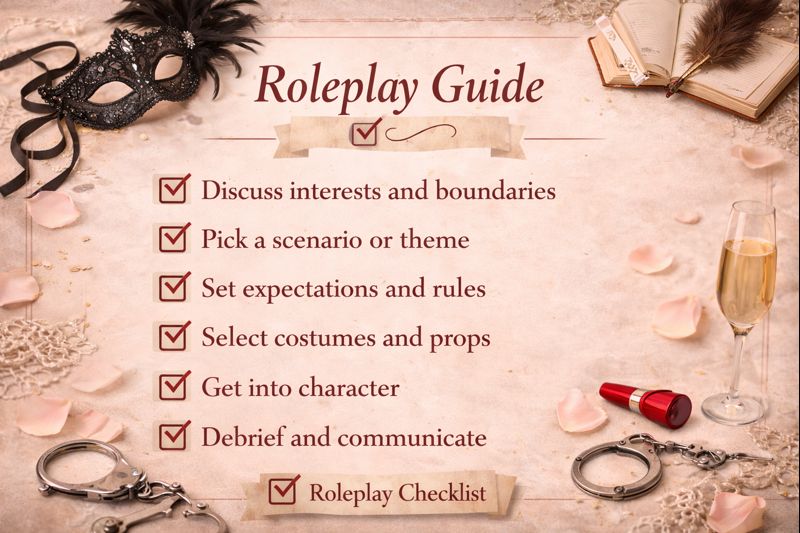
A good briefing covers three layers. First is the story, meaning the roles, the setting and the rough arc. Second is the limits, meaning which activities are welcome and which are off the table. Third is the exit, meaning how anyone stops the scene.
Write the limits in the same language everyone uses in real life. Say whether the evening is soft swap or something else. Say whether partners stay in the same room. A fictional frame never changes the real agreement.
Agree on a safe word that everyone knows and that sounds nothing like dialogue. The guidance on safe words and aftercare applies directly here. Many groups also use a softer check-in word that means slow down without stopping.
Cover the practical details too. Protection and testing are each person's own responsibility, so each person should raise their own needs before the evening. Medical questions belong with a clinician. Alcohol limits also belong in the briefing, since clear judgment keeps consent real.
Staying in Character Versus Breaking It
Staying in character is part of the pleasure. The practical advice on how to stay in character covers voice, props and pacing. In a group scene, one more rule sits on top. The character is always less important than the person playing it.
Break character the moment someone seems uncertain. A pause, a stiff posture or a change in breathing are all reasons to check in. A quick, quiet question in a normal voice costs nothing. The scene can resume in seconds if the answer is yes.
Pay attention to hesitant or unclear replies. A soft no is still a no, even when it arrives in character. If a guest's character says maybe, treat the person as saying maybe too.
Partners should also watch each other. The couple's own bond sits underneath every scene. A partner who looks unsettled deserves a break in the story, even if the guests seem to be enjoying it.
Debriefing After the Scene
The debrief is where the evening becomes a memory rather than a question mark. Hold a short group version first, out of character, while everyone is still together. Thank each other, confirm everyone feels fine, and note anything that felt off.
The couple then needs its own private debrief, usually the next day. Talk about what each partner enjoyed and what felt uncomfortable. Talk about jealousy honestly if it appeared. A scene that only one partner enjoyed deserves real attention.
Follow up with the guests within a day or two. A simple message asking how they feel shows care and closes the loop. It also gives them a chance to raise anything they held back in the moment.
Use what you learn to adjust the next scene, or to skip one entirely. The approach in the fantasy negotiation guide helps couples turn feedback into a clearer plan. Some scenes are worth repeating. Some are better left as a single evening.
Common Mistakes to Avoid
The most frequent mistake is surprise. Adding a new character, a new activity or a new person without prior agreement breaks trust, even if the intent was playful. Every addition needs an out-of-character yes.
A second mistake is using the fiction to hide real feelings. A partner who plays jealous as a character may actually feel jealous. Checking in afterward separates the act from the emotion and keeps both partners honest.
A third mistake is treating guests as props. Another couple or a single brings their own limits, fantasies and nerves. Their comfort counts as much as the hosts' comfort. The rules of consent in swinging apply in full inside any story.
The last mistake is rushing. A scene that feels forced rarely feels good for anyone. Keeping the first attempt short and light gives everyone room to learn what works.
Questions Couples Ask
Do the guests need to know it is role play?
Yes. Every person in a scene must know it is fiction and agree to their role in advance. Deceiving someone about the nature of the encounter removes their ability to consent.
Can role play happen at a club or party?
Many clubs and parties have house rules that shape what guests may do in shared spaces. Keep any public part of a scene subtle and respect other guests. Move anything more private to a room where everyone involved has agreed to it.
What if a guest wants to change the scene halfway through?
Stop the story and talk out of character. If everyone agrees to the change, continue. If anyone hesitates, keep the original plan or end the scene.
Is role play a good way to meet a new couple?
Usually not for a first meeting. Most couples find it works better with people they have already met socially and whose boundaries they already know.
What if only one partner likes the idea?
Then the scene does not happen for now. The hesitant partner's feelings come first, and a no is a complete answer. Information and time help more than persuasion ever does.
How long should a first scene last?
Short is better. A brief scene with a clear ending and a calm debrief teaches more than a long evening that drifts past anyone's comfort.
Join the West Coast Swingers Community
West Coast Swingers is a trusted educational resource for couples exploring the lifestyle. Visit westcoastswingers.com for more guides, or join the private community at members.westcoastswingers.com.
Email: info@westcoastswingers.com | https://westcoastswingers.com/
Final Thoughts
Lifestyle role play succeeds for the same reason good swinging succeeds. The agreement is clear before the fun starts, and anyone can stop without explanation. The costume, the hotel bar and the invented names are only the surface.
A couple that briefs carefully, breaks character without hesitation and debriefs honestly can treat a scene as a shared creative project. The guests leave feeling respected. The couple leaves knowing more about each other than when the evening began.
Free for couples
Get the Free Beginner’s Checklist for Couples
Eight steps from the first honest conversation to your first night out, plus new guides, club and event news, and new games. Unsubscribe any time.
Related Guides

Fantasy Negotiation: How Couples Create Shared Scenarios
Rules, Consent & Communication / By Alex