How to Protect Your Privacy in the Swinging Lifestyle
/ Health, Safety & PrivacyDiscretion is one of the core values of the swinging community. Most lifestyle couples maintain a clear separation between their private erotic lives and their professional, family, and vanilla social circles. This separation is not about shame; it is about protecting the freedom to live the way you choose without risking consequences that have nothing to do with the ethics of your choices.
In practice, privacy in the lifestyle requires intentional management across multiple areas: your online profiles, your email and messaging habits, your device security, your social media presence, and your behavior at events. None of this is complicated, but it does require consistent attention. Casual mistakes, like using your real name on a lifestyle app or checking a swinger site while logged into your personal Google account, can create digital trails you did not intend.
This guide covers the practical steps that experienced lifestyle couples use to protect their privacy effectively. For context on how privacy fits into your broader approach to lifestyle safety, see our article on health, safety, and sexual wellness for swingers.
Separating Lifestyle and Vanilla Social Circles
The clearest and most effective privacy protection is maintaining firm separation between your lifestyle identity and your vanilla social and professional life. This means different names, different contact information, different social media presences, and ideally different devices or browser profiles for lifestyle activities.
Most experienced lifestyle couples operate with a lifestyle persona: a screen name or couple name that appears on all lifestyle platforms, in community communications, and at events. This name is not linked to their real identities, employer information, or legal names. When you meet a couple at a lifestyle event, you typically exchange lifestyle names and contact information. Real last names, employers, and home neighborhoods are shared only when a deeper connection and established trust make it appropriate.
The instinct to overshare personal details with exciting new connections is understandable, but worth resisting until you know people well. The lifestyle community is generally trustworthy and privacy-conscious, but you cannot verify this with people you have just met. Keep personal details general early on and share more over time as relationships develop.
Profile Privacy on Dating Apps
Lifestyle dating apps and sites are where most couples make their first public statement about their participation in the community. Profile privacy decisions made here have significant impact on how exposed your real identity is.
Screen names should be entirely distinct from anything you use in vanilla life. Avoid using your real first name, especially if it is uncommon. Avoid usernames that appear elsewhere online in connection with your real identity. A couple name or a generic lifestyle handle is the standard approach.
Face photos are the most complex decision. Many couples choose to show faces publicly because it generates more interest and faster connections. Others use body shots or cropped images that do not clearly identify them. The right choice depends on your specific risk tolerance, your profession, and your local community size. In smaller cities or tight-knit communities, face photos on public profiles carry more risk than in large metropolitan areas.
Most lifestyle platforms allow you to set photos as visible only to verified members, only to couples you have matched with, or only after you choose to share them. Using these permission settings is strongly recommended, especially when your profile first goes live. You can always open access later, but you cannot undo a face photo that a stranger screenshots.
Location settings on apps should be set to the broadest range available rather than showing your precise location. Showing that you are within a specific neighborhood or near a specific landmark can be enough to narrow down your identity for someone who knows your area. City-level location is sufficient for most matching purposes.
Using a Separate Email Address for Lifestyle Communications
A dedicated email address used exclusively for lifestyle communications is one of the simplest and most effective privacy practices available. This email should be created with a screen name or couple name, not your real name, and should not be linked to your primary Google, Apple, or Microsoft account.
Use a privacy-respecting email provider like ProtonMail, which encrypts messages end-to-end and does not sell user data. Gmail and other mainstream providers are acceptable for basic separation, but be aware that Google associates all accounts under the same browser session. If you use Chrome while logged into your personal Google account and open a lifestyle Gmail in the same browser, Google will link those sessions. Use a separate browser profile or a dedicated browser for lifestyle activities.
The lifestyle email address should be your contact point for all dating sites, event registrations, and community communications. Do not use your real email address for these purposes even if a site seems reputable. Email addresses can appear in data breaches, and an email connected to a lifestyle account could surface in ways you do not expect.
Check your lifestyle email from your lifestyle browser profile or device. Avoid forwarding lifestyle emails to your primary inbox, and avoid accessing lifestyle sites while signed into personal accounts in the same session.
VPN Use: When and Why It Matters
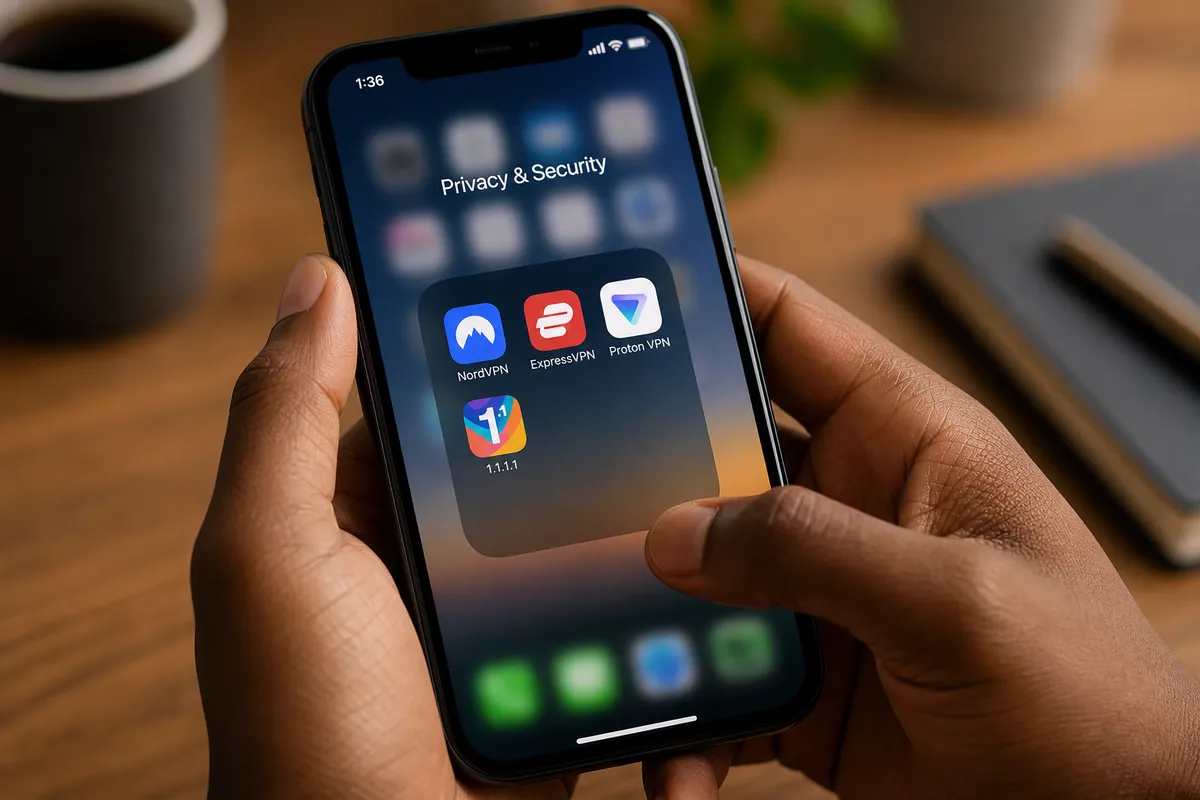
A virtual private network (VPN) routes your internet traffic through an encrypted server, masking your IP address and making it significantly harder for sites, advertisers, and network operators to track your browsing activity. For lifestyle couples who want to ensure their internet usage remains private, a VPN is a worthwhile investment.
VPN use is particularly valuable on shared networks, including home networks where a router log might be visible to others, and on public Wi-Fi at hotels, events, or coffee shops. Accessing lifestyle sites on a hotel network without a VPN means the hotel's network operator can see which domains you visited, even if the content is encrypted. A VPN prevents this.
Reputable paid VPN services include Mullvad, ProtonVPN, and ExpressVPN (affiliate links available). Free VPN services should be avoided; they typically monetize user data, which defeats the purpose. A good paid VPN costs between $5 and $10 per month and provides privacy protection across all your devices.
Enable your VPN before accessing lifestyle sites and keep it active throughout your session. Most reputable VPNs offer a kill switch feature that blocks internet access if the VPN connection drops, preventing accidental exposure of your real IP address.
Social Media Hygiene
Social media is one of the most common areas where lifestyle privacy is accidentally compromised. The cross-contamination of personal and lifestyle identities on social platforms can happen in subtle and unexpected ways.
Do not post lifestyle content, photos, or references from personal social media accounts under any circumstances. Even an indirect reference, like a vague post about an exciting weekend or a check-in at a venue associated with the lifestyle, can be picked up by people who know you well.
Be cautious about who you accept as followers or friends on personal accounts. Mutual connections between your vanilla social circle and lifestyle connections can happen, especially in smaller cities. If you meet someone at a lifestyle event, connect with them through lifestyle channels only, not through personal Facebook or Instagram.
Many lifestyle couples maintain a separate Instagram or social media presence under their lifestyle persona. If you choose to do this, ensure there is no overlap in followers with your personal accounts, no shared photos that could link the two identities, and no location tags or business tags that could narrow down your real identity.
Phone and Device Privacy
Your phone is the device most likely to expose your lifestyle participation to unintended viewers. Notification previews, recent app lists, photo albums, and browser history are all potential exposure points.
Disable message notification previews for lifestyle apps and the lifestyle email account. A notification that shows a preview of a message from a lifestyle contact is visible to anyone who glances at your screen. Turn previews off in your phone's notification settings for any app related to lifestyle activity.
Use a dedicated app folder or keep lifestyle apps on a secondary screen to reduce accidental exposure. Some couples use a secondary phone entirely for lifestyle activities. This is the most thorough approach and eliminates most accidental exposure risks, but it is not necessary for everyone.
Manage your photo library carefully. If you take or receive photos associated with lifestyle activity, store them in a password-protected album or a separate encrypted app like Keepsafe or Private Photo Vault rather than in your main camera roll. Photos shared from your main gallery can accidentally include metadata, location data, or appear in shared photo streams.
Use your phone's built-in screen time or app lock features to require a PIN or biometric authentication to open lifestyle apps. This adds an extra layer of protection if your phone is picked up by someone else.
Event Discretion: What Happens at a Party Stays There
Lifestyle events operate on a clear and widely respected principle: what happens at a party stays there. This is not just a social nicety; it is a foundational agreement that makes the community possible. Violating it damages trust and can have real consequences for people whose privacy depends on discretion.
Do not photograph or record at lifestyle events without explicit consent from everyone who would appear in the image. Most events prohibit photography entirely except in designated areas. Respect this absolutely. The fact that you have a camera on your phone does not give you permission to use it at a private event.
Do not identify or describe specific people from events to others outside the community. Even positive references, like telling a vanilla friend that you saw a recognizable public figure at a lifestyle event, violate the principle of discretion and betray the trust of someone who assumed their participation was private.
Use your lifestyle name at events. If you know a lifestyle contact by their real name from a deepened friendship, keep that knowledge private. Do not introduce them to others by their real name in a lifestyle context where they have presented themselves under a screen name.
Handling Accidental Vanilla/Lifestyle Overlap
Accidental overlap, recognizing or being recognized by someone from your vanilla life at a lifestyle event, happens occasionally and is handled most gracefully with calm discretion. The established community norm is mutual non-acknowledgment unless both parties are clearly comfortable making contact.
If you see someone you know from work, family, or your social circle at a lifestyle event, the appropriate response is to treat the encounter as private unless they initiate contact and clearly indicate they are comfortable with mutual recognition. Acknowledging the encounter in a vanilla context later is a significant breach of the community's discretion norms and can cause real harm.
If you are concerned that your participation has been observed by someone from your vanilla life, take a calm and measured approach. In most cases, the other person has as much reason for discretion as you do. The lifestyle community's strong culture of mutual privacy protection means that most people in this situation will be just as invested in keeping things quiet.
Protecting Your Identity If Outed
Despite careful precautions, outing does occasionally happen. If your lifestyle participation becomes known to people in your vanilla life without your consent, your response matters significantly.
Do not panic or make dramatic statements that draw more attention to the situation. Calm, measured responses minimize the story. Confirm or deny only what you choose to confirm or deny, and keep any statements simple. "My private life is not a subject for public discussion" is a complete and dignified response.
In professional contexts, lifestyle participation is generally not grounds for employment action in most jurisdictions, particularly for consensual legal activity conducted outside of work hours. If you believe you are facing professional consequences as a result of outing, consult with an employment attorney. Document any communications you receive.
If outing involves harassment, the disclosure of images, or other harmful behavior, there may be legal remedies depending on your jurisdiction. Many states have specific laws around non-consensual image sharing and targeted harassment. A lawyer who specializes in privacy or digital harassment cases can advise you on your options.
Join the West Coast Swingers Community
West Coast Swingers brings together couples who value privacy, respect, and discretion as community standards. If you are looking for a community where these principles are understood and honored, join the members area at members.westcoastswingers.com to connect with lifestyle couples who share your commitment to responsible participation.
For guidance on building a lifestyle profile that protects your privacy while still attracting compatible connections, see our articles on swinger profile tips and creating a swinger dating profile that works.
Final Thoughts
Privacy protection in the lifestyle is not paranoia; it is prudent management of information in a world where digital trails persist and professional consequences for personal choices remain real in many contexts. The steps described in this article are practical, accessible, and used by experienced couples in the community every day.
Most of it comes down to intentional separation: different names, different email, different devices or browser profiles, and consistent behavior at events. Build these habits early, maintain them consistently, and you create the conditions where you can participate fully and confidently without unnecessary risk to your professional life or relationships outside the lifestyle.
Discretion protects you, and it protects everyone around you. The community works because its members take this responsibility seriously.
Free for couples
Get the Free Beginner’s Checklist for Couples
Eight steps from the first honest conversation to your first night out, plus new guides, club and event news, and new games. Unsubscribe any time.
Related Posts
Creating a Swinger Dating Profile That Works
Swinger Dating & Profiles / By Alex