
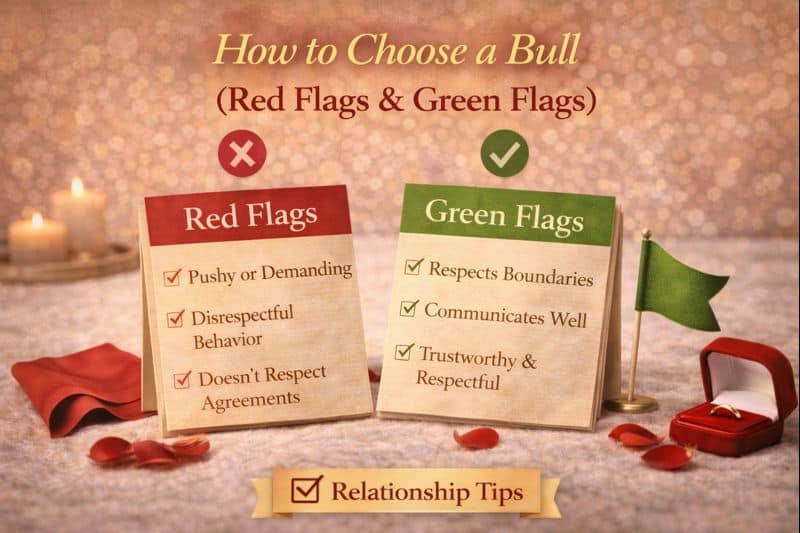
Choosing the right bull is one of the most important decisions in hotwife and stag and vixen dynamics. A good bull enhances trust, excitement, and safety. The wrong bull can introduce drama, pressure, or emotional risk into an otherwise healthy relationship.
Because a bull interacts with an existing relationship, not just an individual, the impact of that choice extends beyond attraction. The right person respects boundaries, understands consent, and aligns with the emotional tone of your dynamic. The wrong person may ignore limits, push for more access, or create stress that undermines trust between partners.
Many issues couples experience in these dynamics are not caused by non monogamy itself, but by poor partner selection. Taking time to screen carefully reduces emotional labor and helps ensure that exploration feels affirming rather than destabilizing.
This guide explains how to choose a bull responsibly by identifying clear red flags to avoid and green flags to prioritize. Whether you are new to ethical non monogamy or refining your boundaries, these principles help protect your relationship first.
What Is a Bull in ENM Dynamics
In hotwife and stag and vixen relationships, a bull is typically a third partner who engages sexually with the vixen with the full knowledge and consent of the primary couple. The bull is not a replacement partner and should respect the established relationship at all times.
The role of a bull exists within clear relational context. This person is invited into a dynamic that already has boundaries, history, and emotional priorities. Healthy involvement requires understanding that the primary relationship comes first and that consent is ongoing, not assumed.
A bull is not there to compete, destabilize, or insert themselves emotionally into the core partnership. Instead, their role is defined by respect, communication, and alignment with the couple’s agreements. When this role is understood clearly, interactions tend to feel safer and more enjoyable for everyone involved.
The Role of a Bull
-
Respects the couple dynamic
-
Follows agreed boundaries
-
Communicates clearly and honestly
-
Understands this is not a monogamous relationship
When these expectations are met, the bull’s presence can enhance excitement without creating emotional strain. When they are ignored, problems tend to surface quickly.
Clarity around this role helps avoid misunderstandings.
Start With Alignment as a Couple
Before choosing a bull, the primary couple must be aligned. This includes boundaries, expectations, and emotional readiness. Alignment ensures that decisions are made collaboratively rather than reactively.
Taking time to align first reduces pressure on any third person and protects the primary relationship from miscommunication. When both partners are clear on what they want and why, it becomes easier to identify who fits and who does not.
Alignment also creates confidence. When partners know they are on the same page, interactions with potential bulls feel intentional rather than uncertain.
Questions to Answer Together
-
Is this a one time or ongoing arrangement
-
How much interaction does the stag want
-
What level of communication is required
-
What behaviors are non negotiable
These questions help define the emotional and logistical framework before anyone else is involved. Honest answers prevent assumptions and reduce the risk of conflict later.
Alignment reduces confusion and prevents conflict later.
Green Flags When Choosing a Bull
Green flags indicate a bull who understands ethical non monogamy and respects the couple. These traits signal emotional maturity, self awareness, and the ability to engage without creating unnecessary risk or pressure.
A good bull recognizes that they are entering an established dynamic, not creating a new one. They listen more than they push, ask questions rather than make assumptions, and accept limits without argument. These behaviors build trust before any physical interaction happens.
Paying attention to green flags early helps prevent issues later. How someone communicates during initial conversations often reflects how they will behave once boundaries are tested.
Healthy Green Flags to Look For
-
Clear communication and patience
-
Respects boundaries without negotiation
-
Understands consent and privacy
-
Comfortable discussing STI testing and protection
-
Does not push for exclusivity or emotional attachment
These traits indicate someone who values mutual respect and emotional safety. They also suggest a lower likelihood of drama or boundary violations.
A good bull prioritizes safety and mutual enjoyment over ego.
Major Red Flags to Avoid
Red flags often appear early. Ignoring them usually leads to problems. How a potential bull behaves in initial conversations is often the clearest indicator of how they will act once emotions or intimacy are involved.
Red flags usually signal misalignment, not misunderstanding. Ethical non monogamy requires respect for boundaries, roles, and consent. When someone dismisses or challenges those fundamentals early, it rarely improves with time.
Pay attention not just to what is said, but how it is said. Tone, patience, and reactions to limits reveal more than promises.
Common Bull Red Flags
-
Disrespectful language toward the stag
-
Pressure to rush meetings or intimacy
-
Dismisses boundaries as unnecessary
-
Attempts to isolate the vixen emotionally
-
Jealousy or competition with the primary partner
These behaviors often indicate entitlement, insecurity, or a lack of respect for the existing relationship. Any one of them is reason enough to pause or disengage.
If something feels off, trust that instinct.
Safety and Sexual Health Considerations
Physical safety supports emotional safety. When health expectations are clear and respected, everyone involved can engage with greater confidence and peace of mind.
Discussing sexual health is not awkward or excessive in ethical non monogamy. It is a sign of responsibility and care. A bull who is comfortable having these conversations demonstrates respect for both partners and the dynamic itself.
Health agreements should be discussed before any meeting and revisited as circumstances change. Avoiding these topics increases risk and anxiety rather than reducing it.
Essential Safety Agreements
-
Recent STI test results
-
Condom use rules
-
No play when symptoms are present
-
Immediate disclosure of risk changes
Following through on these agreements builds trust and reduces emotional strain. Consistency and honesty matter more than convenience.
Aftercare and Ongoing Evaluation
Choosing a bull is not a one time decision. Evaluation continues after each experience. Even when everything appears to go well, emotional responses can shift over time.
Aftercare and reflection help couples stay emotionally aligned. These conversations reinforce that the primary relationship remains the priority and that everyone’s experience matters. They also provide space to address concerns early rather than letting them build quietly.
Ongoing evaluation is not about fault finding. It is about maintaining emotional safety and ensuring that the dynamic continues to feel supportive rather than stressful.
Post Experience Check In
-
Did everyone feel respected
-
Were boundaries honored
-
Did any emotions come up unexpectedly
-
Is continued interaction desired
These questions help partners integrate experiences thoughtfully. They also make it easier to decide whether adjustments are needed or whether the dynamic still feels aligned.
Regular check ins strengthen trust and confidence.
When to End the Dynamic
Ending a bull arrangement is sometimes the healthiest choice. Ethical non monogamy includes knowing when to stop, not just how to begin.
Dynamics change. People change. What felt aligned at one point may no longer feel supportive later. Ending a connection does not mean something failed. It means boundaries and well being are being respected.
Certain signs suggest it may be time to disengage.
-
Boundaries are crossed
-
Emotional discomfort increases
-
Communication becomes strained
-
Trust feels compromised
Ending respectfully protects the primary relationship and honors the values of consent and care. Clear communication and firm boundaries help close dynamics without unnecessary harm.
Ending respectfully is part of ethical non monogamy.
Final Thoughts
Learning how to choose a bull responsibly protects your relationship, emotional health, and sense of safety. The right bull respects the couple first, communicates openly, and values consent at every step.
Intentional selection reduces emotional labor and prevents avoidable stress. When a bull understands their role and honors boundaries consistently, the dynamic is far more likely to feel exciting, affirming, and secure rather than complicated or draining.
Ethical non monogamy works best when third partners enhance trust instead of testing it. Careful screening is not caution driven. It is relationship protecting.
Next Steps
For deeper context, review stag and vixen dynamics explained or revisit how to start the hotwife fantasy safely to reinforce your foundation.
Each of these guides builds on the same core principles of communication, consent, and emotional safety. Strengthening that foundation makes every future choice more confident and aligned.
Intentional choices create confident exploration.
