
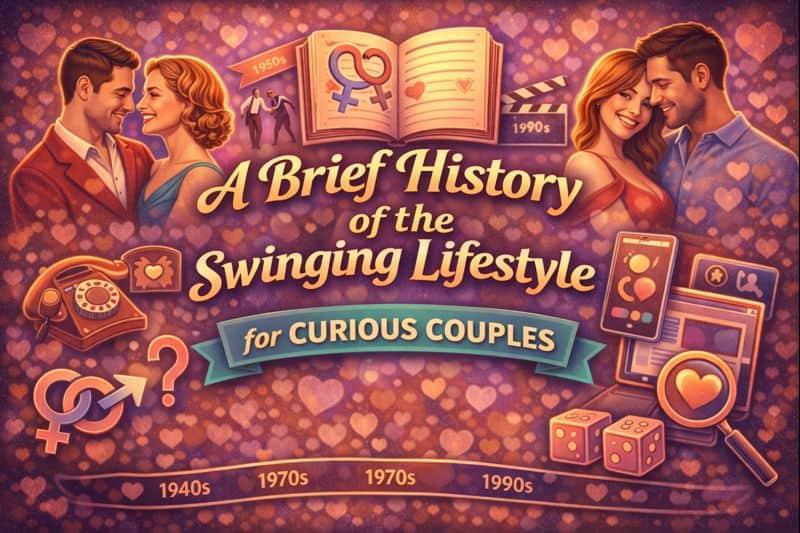
The swinging lifestyle may feel like a modern concept, but its roots stretch back decades and reflect broader cultural shifts around relationships, sexuality, and personal freedom. Long before online platforms and organized events, couples were already questioning traditional norms and seeking ways to explore intimacy together in consensual, honest ways.
Understanding the history of the swinging lifestyle helps couples see how today’s emphasis on consent, communication, and ethical behavior developed over time. What began as informal, private arrangements gradually evolved into more structured communities with shared values and clearer boundaries.
This guide explores where swinging originated, how it changed across different generations, and why it remains relevant for couples today. By looking at its history, couples can better understand how the lifestyle adapted to social change and why its core principles continue to resonate.
Early Origins of Partner Sharing
While modern swinging has clear social structures and shared definitions, the idea of consensual partner sharing is not new. Anthropologists and historians have documented various forms of non-monogamy across cultures throughout history. These arrangements often appeared in communal, spiritual, or ritual contexts rather than within long-term romantic partnerships as understood today.
In most historical examples, partner sharing was informal, community based, or tied to specific social customs. It was rarely centered on the modern concept of a committed couple choosing shared experiences together. Because of this, these early practices differ significantly from what is now recognized as the swinging lifestyle.
The foundation of modern swinging emerged much later, shaped by Western relationship norms, changing views on marriage, and evolving ideas about personal choice and intimacy.
The Post World War II Era and the Birth of Swinging
Most historians trace the origins of the swinging lifestyle to the post World War II era in the United States. This period brought major social shifts, including changing attitudes toward marriage, gender roles, and sexuality.
Military communities played a significant role in these early developments. Couples faced long separations, emotional strain, and the realities of post war life. In some tightly knit social circles, consensual partner swapping emerged as a way for couples to maintain connection, cope with stress, and reinforce trust rather than undermine it.
These early arrangements were typically discreet and guided by mutual understanding. Respect, trust, and consent were emphasized, even if not always vocalized in modern terms. These values laid the groundwork for what would later become the more structured and openly discussed swinging lifestyle.
The Sexual Revolution of the 1960s and 1970s
The sexual revolution had a significant impact on the visibility and evolution of the swinging lifestyle. As cultural attitudes toward sex, marriage, and gender roles began to dramatically shift, more couples questioned the idea that strict monogamy was the only acceptable relationship model.
During this period:
-
Open discussions about sexuality increased
Conversations about desire, pleasure, and sexual freedom became more public and less taboo. -
Alternative relationship models gained attention
Concepts such as open relationships and consensual non-monogamy entered broader cultural awareness. -
Private house parties became more common
Couples began hosting discreet gatherings that allowed like minded adults to connect in a controlled setting.
Despite these changes, swinging largely remained underground. Social stigma, professional risks, and privacy concerns kept most participation hidden from public view.
The Emergence of Swinger Clubs and Organized Events
In the late 1970s and 1980s, swinging began to take on a more organized and structured form. Private clubs, membership based venues, and invite only events started to appear, offering couples safer and more predictable environments.
These spaces introduced clearer expectations and shared standards around:
-
Consent and boundaries
Explicit rules helped ensure that all interactions were voluntary and respected. -
Couple focused participation
The lifestyle remained centered on committed couples exploring together. -
Privacy and discretion
Confidentiality became a core value, helping couples feel secure participating.
This shift toward organized spaces helped formalize the lifestyle and shaped what many now recognize as the modern swinger community, grounded in structure, consent, and mutual respect.
The Impact of the Internet on Swinging
The rise of the internet in the 1990s and early 2000s transformed the swinging lifestyle in significant ways. What was once limited to private social circles or local clubs became more accessible to couples seeking information and connection from all over the world.
Online platforms allowed couples to:
-
Research the lifestyle anonymously
Couples could learn about swinging, terminology, and expectations without revealing their identity. -
Connect with other couples safely
Messaging platforms and profile based sites made it easier to communicate, screen compatibility, and establish boundaries before meeting. -
Learn etiquette and expectations in advance
Access to guides, forums, and shared experiences helped couples understand consent, rules, and norms ahead of time.
This increased accessibility reduced barriers to entry and allowed education to come before participation. As a result, couples were better informed, more prepared, and able to approach the lifestyle with greater confidence and intentionality.
Many couples now begin their journey with resources like Swinger Lifestyle 101 rather than jumping straight into in person events.
How Ethics and Communication Became Central
As swinging grew and became more visible, the importance of ethical behavior became increasingly clear. Early informal arrangements showed that without clear communication and shared expectations, misunderstandings and emotional harm were more likely to occur.
Modern swinging strongly prioritizes:
-
Explicit consent
Consent is clearly discussed, ongoing, and required for every interaction, without assumption or pressure. -
Ongoing communication
Couples regularly check in with each other before, during, and after experiences to ensure alignment and emotional comfort. -
Emotional safety
Protecting the primary relationship and respecting emotional boundaries is treated as essential, not optional.
This evolution marks a clear shift from earlier, less structured forms of non-monogamy. Today’s swinging lifestyle is defined not just by shared experiences, but by intentional ethics, accountability, and mutual respect that support long-term relationship health.
Understanding what defines a swinger today requires recognizing this ethical framework.
Swinging in the 2000s and 2010s
During the 2000s and 2010s, swinging became more visible while still remaining mostly discreet. Increased access to online communities and lifestyle resources made information easier to find, but privacy and confidentiality continued to be important values for most couples.
During this period, many couples increasingly viewed swinging as:
-
A relationship enhancement, not a replacement
Swinging was seen as something that could add excitement or connection without diminishing commitment. -
A shared experience rather than individual exploration
Participation was framed as something couples did together, with joint decision making and mutual boundaries. -
A choice grounded in trust
Communication and emotional safety were emphasized as essential prerequisites rather than afterthoughts.
At the same time, dedicated clubs, lifestyle resorts, and cruises expanded globally. These organized environments offered clearer rules, structured settings, and greater accessibility, helping the lifestyle continue to grow while maintaining its emphasis on consent and discretion.
Is Swinging More Accepted Today?
While swinging remains a private choice for many couples, it faces significantly less stigma than in previous decades. Broader cultural shifts around relationships, sexuality, and personal autonomy have made it easier for couples to discuss non-traditional relationship models without immediate judgment.
Contributing factors include:
-
Greater conversations around consent
Modern relationship discussions emphasize communication, boundaries, and mutual agreement, which align closely with swinging values. -
Increased visibility of alternative relationships
Media coverage, online platforms, and public conversations have normalized the idea that healthy relationships can take different forms. -
Access to accurate education
Couples now have better access to reliable information that separates myths from reality and explains how swinging works in ethical, respectful ways.
Although discretion remains important, these changes have helped create a more understanding social environment for couples exploring or learning about the swinging lifestyle.
Articles like swinging myths busted help replace misinformation with clarity.
The Swinging Lifestyle Today
Modern swinging emphasizes personal choice, mutual respect, and flexibility rather than rigid expectations. Couples are encouraged to define their own boundaries, communicate openly, and decide together what feels right for their relationship.
Participation is approached intentionally, with couples exploring at their own pace rather than following a set path. Emotional well-being is prioritized alongside consent and communication, ensuring that experiences support the primary relationship rather than undermine it.
As discussed in how common is swinging today, curiosity continues to grow even among couples who never fully participate.
Why the History of Swinging Matters
Understanding the history of the swinging lifestyle helps couples approach it with realistic expectations rather than assumptions or stereotypes. Seeing how the lifestyle developed over time provides important context for why certain values are emphasized today.
Swinging did not emerge overnight. It evolved gradually through decades of social change, experimentation, and refinement. Early forms were less structured, which highlighted the need for clearer boundaries, communication, and ethical standards.
Today’s strong emphasis on consent, communication, and emotional responsibility exists because of lessons learned along the way. Knowing this history helps couples understand that modern swinging is shaped by intention and care, not impulse.
What the Future of Swinging Looks Like
The future of swinging appears steady rather than fleeting. Rather than being driven by trends, interest in swinging continues as part of broader conversations around relationship choice, consent, and emotional well-being.
As education improves and stigma decreases, couples are likely to continue exploring the lifestyle thoughtfully and ethically. Access to accurate information and supportive communities allows couples to move at their own pace and make informed decisions.
Swinging is not about trends or pressure. It is about choice, communication, and deciding together what aligns with a couple’s values and relationship goals.
Continue Exploring the Swinging Lifestyle
If you want to deepen your understanding, explore these related guides:
Knowledge creates confidence. Explore the Swinging Lifestyle category to continue learning at a pace that feels right for both of you.
