
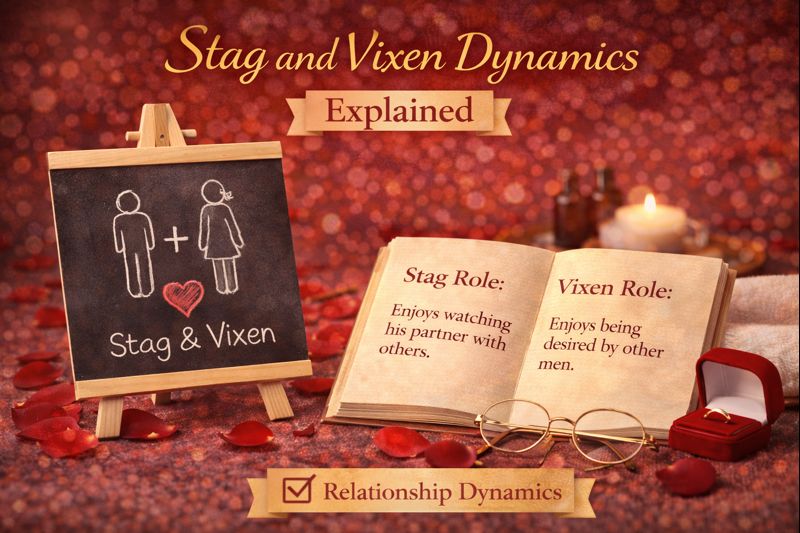
The stag and vixen dynamic is a confident, trust based relationship style within ethical non monogamy that is often misunderstood or confused with other open relationship models. While it shares similarities with hotwife dynamics, the emotional tone, motivations, and power balance are distinct.
In stag and vixen relationships, exploration is often rooted in pride, mutual confidence, and emotional security rather than secrecy or taboo. Both partners view the dynamic as something they participate in together, even when experiences are separate. Communication, consent, and shared values remain central throughout.
Misunderstandings around this dynamic often come from blending labels or assuming all non monogamous styles function the same way. In reality, stag and vixen dynamics emphasize partnership, transparency, and intentional exploration shaped by clearly defined boundaries.
This guide explains stag and vixen dynamics in a clear, respectful way so couples can decide whether this relationship style aligns with their values, boundaries, and desires.
What Is a Stag and Vixen Relationship
A stag and vixen relationship involves a confident male partner, the stag, and a sexually empowered female partner, the vixen. The vixen may engage in consensual sexual experiences with others, with the full awareness, approval, and encouragement of the stag.
At its core, this dynamic is built on mutual confidence and emotional security. The stag is not sidelined or excluded. Instead, he remains emotionally central and actively supportive of the exploration. The vixen retains full agency, choosing when, how, and if she engages, with ongoing communication guiding each step.
Unlike many stereotypes, this dynamic is not about humiliation. It is about pride, confidence, and shared excitement. The emotional tone is often affirming and collaborative, with both partners viewing the dynamic as something they share rather than something that divides them.
Core Characteristics of Stag and Vixen Dynamics
-
Strong mutual trust and emotional security
-
The stag feels pride rather than jealousy
-
The vixen maintains agency and choice
-
Clear communication and enthusiastic consent
These characteristics distinguish healthy stag and vixen relationships from assumptions rooted in secrecy or imbalance. When practiced ethically, the dynamic reinforces partnership, transparency, and mutual respect.
Stag and Vixen vs Hotwife Dynamics
These relationship styles are closely related but not identical. While both fall under ethical non monogamy, the emotional emphasis and internal experience can feel different for couples.
Understanding these distinctions helps partners choose language that reflects how the dynamic actually feels rather than relying on labels that do not quite fit. Neither style is better or more advanced. They simply prioritize different emotional elements.
Both dynamics are flexible and shaped by the people practicing them, not by rigid definitions.
Key Differences to Understand
-
Stag and vixen dynamics emphasize male confidence and pride
-
Hotwife dynamics focus more broadly on female empowerment and shared arousal
-
Neither requires humiliation or power imbalance
-
Both rely on ethical non monogamy principles
In stag and vixen relationships, the stag’s sense of pride and emotional security is often central. In hotwife dynamics, the emphasis may lean more toward shared erotic curiosity and empowerment without a specific focus on male pride.
Some couples identify with both labels, while others strongly prefer one over the other. What matters most is alignment, communication, and mutual consent rather than terminology.
Why Couples Are Drawn to Stag and Vixen Relationships
Couples choose this dynamic for many reasons, often rooted in emotional security rather than sexual novelty alone. While attraction and excitement play a role, the deeper appeal is frequently about confidence, connection, and shared intention.
Many couples are drawn to stag and vixen relationships because they allow open acknowledgment of desire without secrecy. Instead of suppressing attraction or pretending it does not exist, partners engage with it honestly and collaboratively.
For others, the appeal lies in mutual affirmation. The dynamic can reinforce self confidence, pride, and appreciation within the relationship when practiced with care and consent.
Common Motivations
-
Strengthening trust and transparency
-
Celebrating confidence and attraction
-
Exploring desire without secrecy
-
Enhancing intimacy within the primary relationship
These motivations reflect stability rather than dissatisfaction. Couples who feel secure are often better positioned to explore without fear of replacement or loss.
For many couples, the dynamic becomes a shared experience rather than an individual pursuit.
Communication Is the Foundation
Healthy stag and vixen dynamics depend on ongoing communication. This includes discussing fantasies, fears, expectations, and emotional responses before anything happens. Communication is what turns curiosity into something intentional rather than risky.
Open dialogue allows both partners to feel emotionally safe expressing excitement as well as hesitation. One partner may feel confident while the other feels uncertain at times, and those differences need space rather than pressure. Honest communication prevents assumptions from forming and keeps both people actively involved in shaping the dynamic.
Communication is not a one time agreement. It is a continuous process that adapts as feelings, comfort levels, and experiences change.
Important Conversations to Have
-
Is this a fantasy or an active goal
-
What boundaries feel necessary right now
-
How will we handle unexpected emotions
-
What does reassurance look like for each partner
These conversations help couples stay aligned as the dynamic develops. Revisiting them regularly reinforces trust and ensures that both partners continue to feel heard and valued.
These conversations should continue as the dynamic evolves.
Setting Boundaries That Support Trust
Boundaries are not about control. They are about safety and clarity. Clear boundaries create emotional security, allowing exploration to happen without constant uncertainty or fear.
In stag and vixen dynamics, boundaries help both partners feel grounded. They define what is comfortable, what is off limits, and how to respond if emotions shift. Rather than restricting freedom, boundaries create the structure that makes freedom feel safe.
Healthy boundaries are collaborative and flexible. They are shaped by current comfort levels and adjusted as trust and experience grow.
Common Stag and Vixen Boundaries
-
Limits on emotional connections outside the relationship
-
Agreed upon types of encounters
-
Communication expectations before and after experiences
-
Rules around discretion and privacy
Revisiting boundaries regularly helps ensure they remain supportive rather than outdated. Open discussions about boundaries prevent assumptions and reinforce mutual respect.
Boundaries can change and should be revisited regularly.
Handling Jealousy and Insecurity
Even confident couples may experience moments of insecurity. This does not mean the dynamic is failing. Jealousy and insecurity are normal emotional responses that can surface when vulnerability and attachment are involved.
In healthy stag and vixen relationships, these emotions are treated as signals rather than problems. They point to areas where reassurance, clarity, or adjustment may be needed. Addressing them early prevents emotional buildup and keeps communication open.
Ignoring jealousy or minimizing it often increases its intensity. Acknowledging it calmly allows couples to respond with care instead of defensiveness.
Healthy Responses to Jealousy
-
Acknowledge emotions without blame
-
Ask for reassurance clearly
-
Debrief experiences together
-
Pause or adjust boundaries when needed
These responses help separate feelings from accusations and keep the focus on connection rather than control. Reassurance builds emotional safety and reinforces trust over time.
Many couples find that confidence grows with honest reflection.
Safety, Consent, and Sexual Health
Ethical non monogamy requires responsibility. Emotional trust and physical safety are deeply connected, and neglecting one often undermines the other.
Clear safety agreements help reduce anxiety and reinforce that care and respect extend beyond emotions into real world behavior. These conversations should happen early, before any experiences occur, and continue as circumstances change.
Prioritizing sexual health communicates maturity and mutual respect. It also supports long term sustainability by preventing avoidable harm or uncertainty.
Basic Safety Agreements
-
Regular STI testing
-
Clear protection rules
-
Transparency about risk changes
-
Respecting any no play periods
Following through on these agreements builds confidence and reinforces trust. Consistency matters more than perfection, and honesty matters more than comfort.
Organizations like Planned Parenthood offer reliable guidance for safer non monogamous practices.
When Stag and Vixen Dynamics May Not Be Healthy
This relationship style is not suitable for every couple. Ethical exploration depends on voluntary enthusiasm, emotional stability, and mutual respect.
When these conditions are missing, attempting to move forward can create pressure or deepen existing issues rather than strengthen connection. Recognizing misalignment early is a form of care, not failure.
Certain warning signs suggest it may be healthier to pause, slow down, or refocus on the foundation of the relationship.
-
If one partner feels pressured
-
If trust is already damaged
-
If communication is inconsistent
-
If boundaries are ignored or dismissed
In these situations, slowing down or seeking guidance may be necessary. Addressing underlying concerns first protects emotional well being and preserves the possibility of healthier exploration in the future.
Final Thoughts
Understanding stag and vixen dynamics helps couples make informed, respectful choices about ethical non monogamy. Clarity around what this relationship style is and is not allows partners to explore without relying on assumptions or stereotypes.
When built on trust, communication, and mutual enthusiasm, this dynamic can deepen connection and confidence rather than create distance. Like all forms of ethical non monogamy, its success depends less on labels and more on how intentionally partners care for one another.
There is no single correct way to practice a stag and vixen relationship. What matters is that both partners feel secure, respected, and aligned as the dynamic evolves.
Next Steps
If you are exploring related dynamics, continue with our guide on how to start the hotwife fantasy safely or begin with ethical non monogamy basics to strengthen your foundation.
Confidence grows when curiosity is matched with care.
