
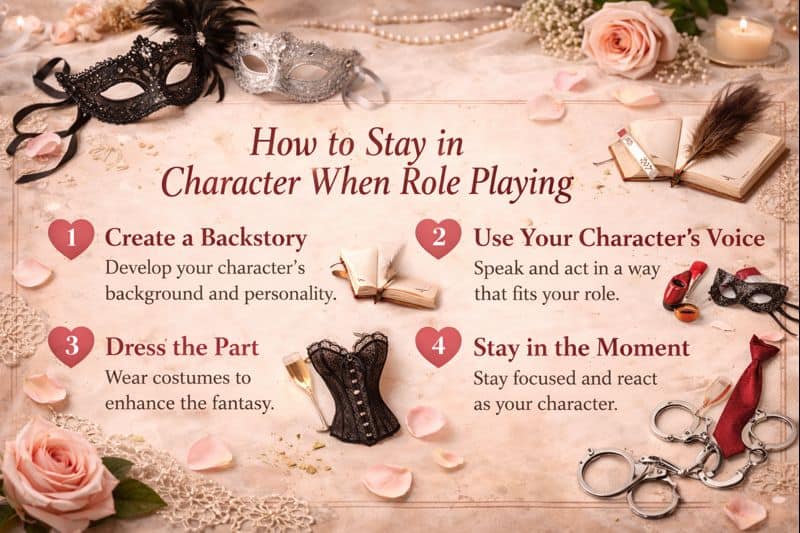
One of the most common challenges couples face with roleplay is staying in character. Even when a scenario feels exciting or well planned, immersion can easily break through laughter, overthinking, self consciousness, or slipping back into everyday habits. These moments are normal and do not mean roleplay is not working. They simply highlight how unfamiliar stepping into fantasy can feel at first.
The good news is that staying in character does not require acting skills, dramatic dialogue, or perfection. Immersion comes from comfort, intention, and shared understanding rather than performance. When both partners feel relaxed and aligned, staying in character becomes much easier and more natural.
Many couples find that breaking character happens because expectations are too high. Trying to “do it right” can create pressure that pulls attention away from the experience itself. Roleplay works best when it feels collaborative, playful, and forgiving of imperfections.
Preparation also plays a key role. Small choices made before the scene begins, such as agreeing on tone, setting boundaries, and choosing simple cues, help create a container where imagination can unfold without stress. Clear communication before and during the scene allows both partners to stay present instead of worrying about mistakes.
This guide explains how to stay in character during erotic roleplay using practical, confidence building tips. Each approach focuses on comfort, connection, and communication, helping couples remain immersed while keeping the experience playful, consensual, and emotionally safe.
Why Staying in Character Matters
Immersion is what transforms roleplay from a fun idea into a truly memorable experience. When both partners stay present in the fantasy, the scene gains momentum, anticipation builds naturally, and confidence replaces self consciousness. Staying in character helps the experience feel intentional rather than fragmented.
Immersion also creates emotional continuity. Instead of stopping and starting, partners remain connected through tone, pacing, and attention. This continuity allows attraction and curiosity to deepen without interruption.
When immersion is maintained, roleplay feels less like something you are trying and more like something you are experiencing together.
-
Creates emotional and mental connection
Staying in character keeps both partners focused on the shared moment. This mental alignment often strengthens emotional closeness and mutual awareness. -
Reduces awkward pauses
When partners commit to the fantasy, there is less second guessing. Even silence feels intentional rather than uncomfortable. -
Strengthens fantasy realism
Consistency in tone, language, and behavior makes the scenario feel believable and engaging, even when it is simple. -
Builds trust and vulnerability
Choosing to stay present despite imperfections shows trust. It allows both partners to be seen, playful, and open without fear of judgment.
Staying in character is not about perfection. It is about presence. When both partners commit gently and support each other in the fantasy, roleplay becomes smoother, more immersive, and far more connecting.
If you are new to roleplay, start with broad ideas in 20 Sexy Roleplay Ideas for Couples.
Choose a Role That Feels Natural
The easiest way to stay in character is to choose roles that already align with your personality, energy, and communication style. Immersion comes more naturally when you are amplifying parts of yourself rather than trying to become someone completely different. Confidence grows when the role feels familiar instead of forced.
Many couples struggle with staying in character because they start with roles that feel intimidating or overly theatrical. When a role requires constant effort to maintain, self consciousness and overthinking tend to take over. Choosing something that feels intuitive helps you relax and stay present.
-
Pick scenarios that feel exciting, not intimidating
Attraction and curiosity work best when you feel drawn in rather than pressured. If a role makes you nervous in a stressful way, it is likely too complex for now. -
Avoid overly complex characters at first
Simple roles with clear dynamics are easier to maintain. You do not need detailed backstories, accents, or scripts to create believable immersion. -
Lean into qualities you already have
Confidence, curiosity, calm authority, playfulness, or warmth can all translate easily into roleplay. Using traits that already feel natural makes staying in character feel effortless.
Choosing a role that feels natural does not limit creativity. It creates a strong foundation. Once comfort and confidence build, expanding into new dynamics becomes easier and far more enjoyable for both partners.
Prepare Before the Scene
Preparation reduces anxiety and makes it much easier to commit fully to a roleplay scenario. When key details are decided ahead of time, your mind does not have to multitask during the scene. That mental space allows you to stay present, confident, and immersed instead of worrying about what comes next.
Preparation does not need to be extensive or complicated. A few intentional choices create a clear container where imagination can unfold naturally.
Helpful preparation steps:
-
Agree on names and roles
Choosing names and clarifying who plays which role creates an immediate shift out of everyday identity. This helps both partners stay anchored in the fantasy. -
Decide how the scene will begin and end
Knowing the opening and closing moments removes uncertainty. A clear start makes it easier to step into character, and a defined end helps you stay present without worrying about how to exit. -
Choose outfits or props that support the fantasy
Simple visual cues reinforce the role and reduce the need for verbal explanation. Clothing or props should feel comfortable and confidence boosting rather than distracting. -
Set aside uninterrupted time
Eliminating interruptions helps maintain immersion. Even a short, focused window is more effective than a long scene with distractions.
Preparation is not about control. It is about creating safety and clarity. When both partners know what to expect, staying in character feels natural, relaxed, and far more enjoyable.
Use Simple Dialogue
You do not need elaborate scripts or clever lines to stay in character. In fact, overly planned dialogue often pulls you out of the moment. Simple, confident language allows the interaction to feel natural and keeps your attention on your partner rather than on remembering what to say next.
Roleplay dialogue works best when it mirrors real conversation. Short sentences, pauses, and genuine reactions create far more immersion than rehearsed speeches. When you respond naturally, the fantasy feels lived in rather than performed.
-
Ask questions in character
Questions keep conversation flowing and invite your partner to participate actively. They also reduce pressure because you are responding rather than leading every moment. Curiosity helps maintain realism and connection. -
Use affirming language
Simple affirmations reinforce confidence and safety. Letting your partner know they are doing well or that you like how they are responding strengthens trust and keeps both of you engaged. -
Respond naturally rather than performing
You do not need to sound different or dramatic. Using your normal voice and reacting authentically makes the scene feel believable and easier to sustain.
Simple dialogue keeps roleplay grounded. When both partners focus on listening and responding instead of performing, staying in character becomes effortless and the experience feels more connected and immersive.
Stay Present in Your Body
Physical awareness plays a major role in staying in character. When attention drifts into your head, immersion breaks. When attention stays in your body, the fantasy feels grounded and real. Staying present physically helps you respond intuitively instead of overthinking each moment.
Slowing down is especially important. Rushed movement often comes from nervous energy, while intentional movement signals confidence and control. When your body moves with purpose, your mind follows.
-
Slow down your movements
Deliberate, unhurried motion helps maintain the tone of the scene. Slowing down also gives your partner time to respond, which keeps interaction fluid and immersive. -
Maintain eye contact when appropriate
Eye contact anchors attention and reinforces connection. Used intentionally, it deepens presence and reduces the urge to break character through distraction or nervous laughter. -
Focus on tone and pacing
How something is said often matters more than what is said. Calm, measured tone and steady pacing keep the fantasy believable and emotionally grounded.
Staying present in your body allows roleplay to unfold naturally. When movement, eye contact, and tone are intentional, immersion strengthens and the experience feels confident, connected, and fully embodied.
Handling Awkward Moments
Awkward moments are a normal part of roleplay, especially when couples are building confidence or trying something new. Staying in character does not mean avoiding mistakes or suppressing natural reactions. It means knowing how to move through those moments without abandoning the scene entirely.
Immersion is not fragile. Small pauses or smiles do not ruin a roleplay unless you treat them as failures. Often, how you recover matters more than the interruption itself.
-
Pause briefly without breaking the scene
A short pause can feel natural and intentional. Staying quiet for a moment keeps the energy contained instead of pulling you out of character. -
Take a breath and continue
A slow breath helps reset focus and bring attention back into your body. Once grounded, it becomes easier to pick up where you left off. -
Laugh quietly if needed, then reenter the role
Laughter can release tension. A brief smile or soft laugh does not end the fantasy as long as you gently return to character afterward.
Handling awkward moments with ease builds confidence. When both partners allow flexibility and recovery, roleplay feels safer, more relaxed, and far more immersive over time.
Using Props and Environment
Props and environmental cues help anchor the fantasy and reduce the mental effort of staying in character. When the space around you supports the roleplay, immersion feels easier and more natural. These cues gently remind both partners that they are stepping into something intentional and shared.
You do not need elaborate setups. Small, thoughtful adjustments often have the strongest impact because they support imagination without becoming distracting.
-
Lighting changes mood
Softer or dimmer lighting signals a shift away from everyday routines. Light influences emotional tone and helps the scene feel distinct from normal life. -
Music reinforces atmosphere
Background music fills silence and sets pacing. It can guide energy, reduce self consciousness, and make transitions within the scene feel smoother. -
Simple props support imagination
A glass, notebook, jacket, or piece of furniture can serve as a grounding reference point for the role. One or two props are usually enough to reinforce the fantasy without pulling focus.
When props and environment work together, they create a container for the roleplay. This external support allows both partners to relax, stay present, and remain in character with far less effort.
Communication Without Breaking Character
Staying in character does not mean ignoring communication. In fact, clear communication is what allows immersion to continue safely and comfortably. Checking in can be woven into the roleplay itself when done intentionally, keeping both partners present without pulling the scene apart.
When communication feels natural and agreed upon, it supports trust rather than interrupting the fantasy.
-
Use in character questions
Questions that fit the role allow you to check comfort and engagement while staying immersed. Simple, role-aligned language keeps the interaction fluid and believable. -
Agree on subtle signals beforehand
Nonverbal cues such as a hand squeeze, a change in posture, or a specific word can communicate comfort or hesitation without stopping the scene. These signals reduce anxiety and help both partners stay relaxed. -
Pause the scene if needed
If something feels unclear or uncomfortable, it is always okay to pause completely. Taking a brief break to reset protects emotional safety and often makes it easier to return to the roleplay afterward.
Communication is not the opposite of immersion. It is the foundation of it. When both partners know how to check in without fear of breaking the moment, staying in character becomes more secure, confident, and enjoyable.
For consent focused communication, see Consent in Swinging.
Ending the Scene Intentionally
Deciding how the roleplay will end is just as important as how it begins. Clear endings create emotional safety and make it easier for both partners to stay fully present during the scene without worrying about how to exit. When the ending is intentional, immersion feels contained rather than abrupt.
An agreed upon ending can be a phrase, a time limit, or a specific action that signals the transition out of character. Knowing this in advance helps both partners relax into the fantasy, confident that there is a respectful and supportive close.
Ending intentionally also prevents confusion. It clearly marks the shift from roleplay back into your everyday relationship, allowing both partners to step out of character with ease and clarity.
Aftercare and Reflection
After the scene, reconnect emotionally as yourselves. Aftercare helps both partners feel grounded, reassured, and appreciated after stepping out of a fantasy role. This step reinforces trust and ensures the experience feels complete rather than unfinished.
Reflection does not need to be critical or detailed. A brief, supportive conversation helps integrate the experience.
You might:
-
Share what felt good or confidence boosting
-
Mention anything that felt awkward or distracting
-
Discuss small adjustments you might want to try next time
Approach reflection with curiosity and kindness. When aftercare and reflection are part of the experience, roleplay becomes more than a moment of fantasy. It becomes a shared practice that builds trust, communication, and deeper connection over time.
Common Mistakes to Avoid
Even couples who enjoy roleplay can struggle with immersion when certain patterns show up. Avoiding these common mistakes helps roleplay feel supportive, confident, and emotionally safe rather than stressful or forced.
-
Overthinking performance
Treating roleplay like something to perform perfectly often pulls attention out of the moment. Presence matters more than delivery. Let the interaction unfold naturally. -
Choosing roles that feel uncomfortable
If a role feels awkward or misaligned with your personality, staying in character becomes difficult. Comfort and familiarity support confidence far more than novelty. -
Skipping preparation
Going in without agreed roles, boundaries, or timing can create uncertainty. Even light preparation helps both partners relax and commit more fully. -
Ignoring emotional check ins
Staying immersed should never come at the cost of emotional awareness. Noticing shifts in energy and checking in protects trust and connection.
Avoiding these mistakes keeps roleplay grounded and enjoyable. When couples prioritize ease and communication, immersion becomes much more natural.
Why Staying in Character Builds Confidence
When couples successfully stay in character, confidence grows naturally. Each immersive experience reinforces the idea that roleplay can be safe, fun, and connecting rather than awkward or intimidating.
Staying in character builds confidence because:
-
Partners learn they can trust themselves and each other
-
Awkward moments feel manageable rather than disruptive
-
Communication becomes easier and more intuitive
-
Fantasy feels less intimidating over time
Each experience becomes a reference point. The more often couples stay present and recover smoothly from small disruptions, the easier future roleplay feels. Confidence is built through repetition, not perfection.
Final Thoughts
Staying in character during erotic roleplay is about comfort, communication, and curiosity. It is not about acting skills, flawless dialogue, or never laughing. When couples focus on connection rather than perfection, immersion happens naturally.
Preparation, presence, and kindness toward each other make roleplay feel safe and enjoyable. When both partners feel supported, staying in character becomes less effortful and far more rewarding.
Ready to learn how couples design fantasies together in a way that feels collaborative and consent first? Continue with our final guide in this category and explore how shared imagination and communication create the most meaningful roleplay experiences.
Fantasy Negotiation for Couples
